Views: 328 Author: Site Editor Publish Time: 2026-04-28 Origin: Site
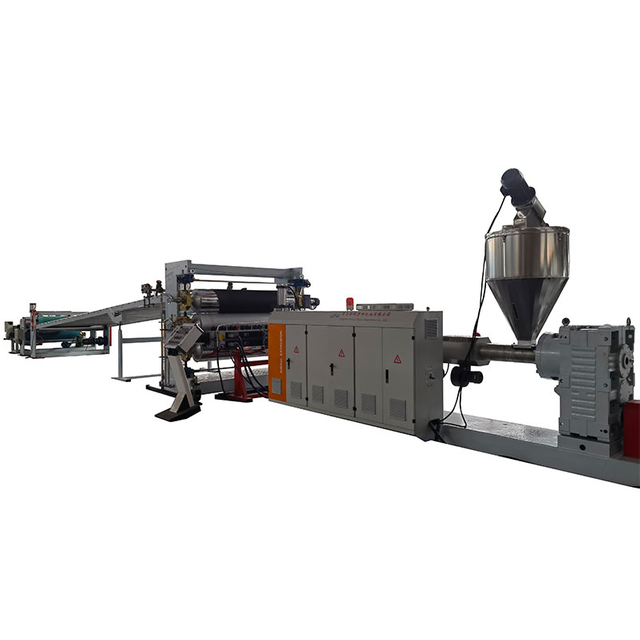
The automotive industry demands excellence in every component, right down to the floor beneath your feet. Automotive grade floor mat sheets aren't just covers; they are engineered safety and comfort systems. To produce mats that meet global OEM (Original Equipment Manufacturer) requirements, manufacturers must focus on material integrity, durability, and precise fabrication. Achieving these benchmarks starts with a high-performance Car Mat Sheet making Machine. This guide dives deep into the technical quality standards of these materials and how the right Automatic TPE car mat extrusion line ensures your products exceed market expectations. Whether you are a veteran manufacturer or exploring a high speed PVC mat production setup, understanding these standards is vital for scaling your business.
Quality starts at the molecular level. Automotive floor mats must withstand extreme temperature fluctuations, mechanical wear, and chemical exposure. Modern standards prioritize Thermoplastic Elastomers (TPE) and specialized PVC blends.
When we look at the raw materials processed by a Car Mat Sheet making Machine, we categorize them by their resistance to "stress whitening" and "compression set." A low-quality sheet will deform under the weight of a driver's heel over time.
TPE (Thermoplastic Elastomer): Often referred to as "synthetic rubber," TPE offers the flexibility of rubber with the recyclability of plastic. A TPE floor mat sheet making machine must maintain precise heat zones to ensure the polymer chains align correctly, providing that premium, soft-touch feel without the odor of traditional rubber.
PVC (Polyvinyl Chloride): High-grade PVC remains a staple for heavy-duty protection. However, the quality standard requires "low-VOC" (Volatile Organic Compounds) PVC to prevent that "new car smell" from becoming a health hazard.
Property | TPE Standards | PVC Standards |
|---|---|---|
Tensile Strength | > 15 MPa | > 12 MPa |
Elongation at Break | 300% - 600% | 200% - 400% |
Hardness (Shore A) | 55 - 75 | 60 - 80 |
UV Resistance | Excellent (Grade 4-5) | Moderate to Good |
To meet these numbers, the Automatic car mat sheet production line must include advanced gravimetric dosing systems. These systems ensure the masterbatch and additives are mixed perfectly, preventing color fading or structural brittleness. We see that consistent material output is the only way to pass the rigorous ISO 3795 flammability tests required by the automotive sector.
Thickness variation is the enemy of quality. In the automotive world, a mat that is 3.5mm in the center but 3.2mm at the edges is a failed product. This is where the engineering of the Car Mat Sheet making Machine becomes the deciding factor in your ROI.
Modern High speed floor mat extrusion machines use automated T-dies. These dies adjust the flow of molten plastic in real-time. If the sensors detect a deviation in sheet thickness, the machine automatically compensates.
Uniform Cooling: If one side of the sheet cools faster than the other, it warps. We utilize high-precision chrome-plated rollers with internal water circulation to ensure a steady temperature gradient across the entire width.
Surface Texture Consistency: The "grain" or pattern on a mat isn't just for looks; it provides the Non slip properties essential for driver safety. The embossing roller on your Car Mat Sheet making Machine must apply equal pressure. Any unevenness leads to "bald spots" where the anti-skid pattern is shallow, failing safety audits.
Efficiency shouldn't sacrifice quality. A High speed TPE car mat making machine can produce thousands of square meters daily. The challenge is maintaining the "internal stress" of the sheet. If the line pulls the sheet too fast without proper annealing, the mats will shrink or curl after they are cut. Quality standards dictate a shrinkage rate of less than 0.5% after 24 hours at 70°C. Only a well-calibrated Automatic car mat sheet making machine can achieve this balance of speed and stability.
A floor mat that slides under the pedals is a death trap. Consequently, the "bottom nibs" or the anti-skid backing of the sheet are subject to strict friction coefficient standards.
When we operate a Car Mat Sheet making Machine, the secondary embossing stage is where the magic happens. We focus on two types of slip resistance:
Top Surface Friction: The driver's shoe must not slip, even when wet. This requires a specific micro-texture often produced by a Non slip PVC mat making machine.
Bottom Surface Anchorage: The mat must "bite" into the vehicle's carpet. The nibs must be sharp enough to grip but resilient enough not to break off.
Manufacturers must subject their sheets to "Dynamic Friction" tests. We look for a coefficient of friction (CoF) higher than 0.6 on both dry and wet surfaces.
TPE materials naturally offer higher friction than older polyethylene (PE) versions.
EVA car mat sheets provide a lightweight alternative but require deeper patterns to maintain the same safety levels.
Using an Automatic car mat sheet making machine equipped with dual-side embossing allows for the simultaneous creation of the aesthetic top pattern and the functional bottom safety grips. This integration reduces production steps and ensures that the safety features are "baked into" the structural integrity of the sheet, rather than being an afterthought.
The modern consumer is hyper-aware of "chemical smells." In the automotive industry, this is regulated by VOC (Volatile Organic Compound) standards like the VDA 278. Your Car Mat Sheet making Machine plays a direct role in how your product smells and its environmental footprint.
Have you ever seen a greasy film on the inside of a car windshield? That is "fogging," caused by low-quality plasticizers leaching out of the floor mats. High-quality TPE car mat sheet making machines allow for the processing of medical-grade or food-grade polymers that have zero plasticizers.
Odor Testing: Mats are placed in a sealed chamber at 80°C. A panel of experts (or electronic noses) grades the smell from 1 to 6. A grade of 3 or lower is required for luxury vehicle contracts.
Recyclability: The trend is moving toward "Circular Economy." TPE is 100% recyclable. Off-cuts from your Automatic TPE car mat extrusion line can be granulated and fed back into the Car Mat Sheet making Machine, reducing waste without degrading the quality of the final sheet.
We must also consider the energy consumption of the High speed car mat sheet making machine. High-efficiency motors and electromagnetic heating systems reduce the carbon footprint of the manufacturing process itself. By choosing a PVC floor mat production line that utilizes recycled stabilizers, we help manufacturers meet "Green Label" certifications which are becoming mandatory in European and North American markets.
Automotive interiors are harsh environments. In summer, dashboard temperatures can exceed 100°C; in winter, they can drop to -40°C. A standard floor mat sheet would crack or melt. Automotive-grade sheets, however, are built for "Thermal Cycling."
To pass quality standards, samples from the Car Mat Sheet making Machine undergo rigorous cycling:
Heat Aging: 168 hours at 90°C. The sheet must not become sticky or lose more than 5% of its flexibility.
Cold Crack Test: The sheet is frozen to -30°C and then hit with a standard weight. It must not shatter.
Material Type | Low Temp Limit | High Temp Limit | Recommended Machine |
|---|---|---|---|
TPE | -50°C | +120°C | TPE Car Mat Sheet Machine |
PVC | -20°C | +80°C | Automatic PVC Mat Machine |
EVA | -30°C | +70°C | EVA Sheet Extrusion Line |
Sunlight coming through car windows acts like a magnifying glass. Without proper UV stabilizers, colors will bleach within months. When we set up a High speed car mat sheet making machine, we ensure the auxiliary feeding system accurately injects UV inhibitors. This ensures the deep blacks and vibrant grays of the mats remain consistent for the 5-to-10-year lifespan of the vehicle.
Quality isn't just about strength; it's about meeting the aesthetic "Standard of Luxury." The ability to switch between textures and colors rapidly is a hallmark of a versatile Car Mat Sheet making Machine.
Vehicle manufacturers often request unique patterns—diamond weaves, honeycomb structures, or leather-mimicking grains.
Quick-Change Rollers: A high-end Automatic car mat sheet making machine features a "quick-change" system for the embossing rollers. This allows a factory to switch from a budget Non slip PVC mat to a premium TPE 3D mat texture in under an hour.
Multi-Layer Co-Extrusion: Some standards require a "sandwich" structure. This involves a Car Mat Sheet making Machine with two or three extruders.
Top Layer: High-wear, colored TPE.
Middle Layer: Recycled material for cost-efficiency.
Bottom Layer: High-grip, soft-touch material.
In-mold labeling or precise embossing of logos is becoming a standard. This requires the High speed car mat sheet making machine to have synchronized timing with downstream cutting units. If the sheet stretches during production, the logo becomes distorted. Precise tension control (using dance rollers and load cells) is the only way to ensure every logo is centered and crisp.
The hardware you choose dictates your quality ceiling. You cannot produce "S-Class" quality mats on a "B-grade" machine.
When auditing a Car Mat Sheet making Machine, we look for these specific components:
Bimetallic Screws: These handle the abrasive nature of some fillers and additives without wearing down, ensuring consistent pressure over years of operation.
PLC Control Systems: An Automatic car mat sheet making machine should have a centralized brain (like Siemens or Omron) that logs every production parameter. This "Digital Twin" of the production run is essential for ISO quality audits.
Efficient Cutting Systems: Whether it's a hydraulic shear or a flying cutter, the edge quality must be clean. Frayed edges are a sign of poor temperature control during the cooling phase.
The shift toward Automatic TPE car mat extrusion lines is driven by the need to eliminate human error. Manual adjustments to thickness or speed often lead to batches of "seconds" or waste. By utilizing a fully Automatic car mat sheet making machine, the operator becomes a supervisor rather than a mechanic. This consistency is exactly what automotive OEMs look for when vetting their Tier 1 and Tier 2 suppliers.
At Xinrui, we don't just build machines; we engineer production success. I am proud to say that our Xinrui factory has become a benchmark for excellence in the plastic extrusion industry. We have spent years perfecting the Car Mat Sheet making Machine to meet the specific "Automotive Grade" standards discussed in this article. Our facility is equipped with state-of-the-art CNC machining centers that allow us to produce every critical component—from the heavy-duty extruders to the precision embossing rollers—with micron-level accuracy.
We understand that our customers need more than just hardware. They need a partner who understands the chemistry of TPE, PVC, and EVA. That is why we provide a "turnkey" experience. When you visit our Xinrui facility, you will see our dedicated R&D team testing new formulations on our pilot lines. We have successfully exported our Automatic car mat sheet making machines to over 30 countries, helping manufacturers transform raw polymers into high-margin automotive accessories. Our strength lies in our customization; whether you need a High speed 2500mm wide line or a compact specialized Non slip mat setup, we have the technical expertise to deliver. We invite you to leverage our decades of experience and our robust manufacturing infrastructure to elevate your production quality to the global stage.
Understanding quality standards for automotive grade floor mat sheets is about more than just checking boxes. It is about a commitment to passenger safety, environmental responsibility, and long-term durability. By focusing on material science, extrusion precision, and thermal stability, manufacturers can secure lucrative contracts in the competitive automotive market. Central to this success is the investment in a high-quality Car Mat Sheet making Machine. From Automatic TPE extrusion to High speed PVC processing, the right technology ensures that every sheet you produce is a testament to your brand's excellence.
Q1: What is the most durable material for automotive floor mats?
TPE (Thermoplastic Elastomer) is currently considered the gold standard. It offers better weather resistance than PVC and is more durable than EVA, while being 100% recyclable.
Q2: Can one Car Mat Sheet making Machine produce different materials?
Yes, a well-designed Automatic car mat sheet making machine can be tuned to process TPE, PVC, and PE. However, the screw design and temperature controllers must be high-quality to handle the different melting points.
Q3: How do I ensure my mats are truly "Non slip"?
Safety is achieved through a combination of material "tackiness" and physical pattern design. Using an Automatic car mat sheet making machine with precision embossing rollers ensures the patterns are deep and consistent enough to meet friction standards.
Q4: Is the "new car smell" from floor mats dangerous?
It can be. High levels of VOCs (Volatile Organic Compounds) are harmful. Quality standards now require mats produced on a TPE car mat sheet making machine to use low-VOC resins to ensure air quality inside the vehicle.
Q5: Why is "High speed" production important for quality?
"High speed" isn't just about quantity. A High speed car mat sheet making machine maintains more consistent thermal pressure, which often results in a more uniform molecular structure in the sheet compared to slower, older machines.