Views: 292 Author: Site Editor Publish Time: 2026-04-12 Origin: Site
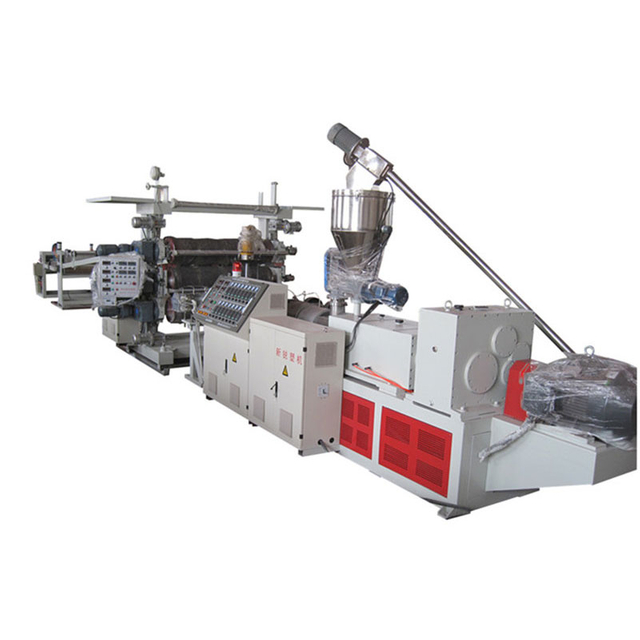
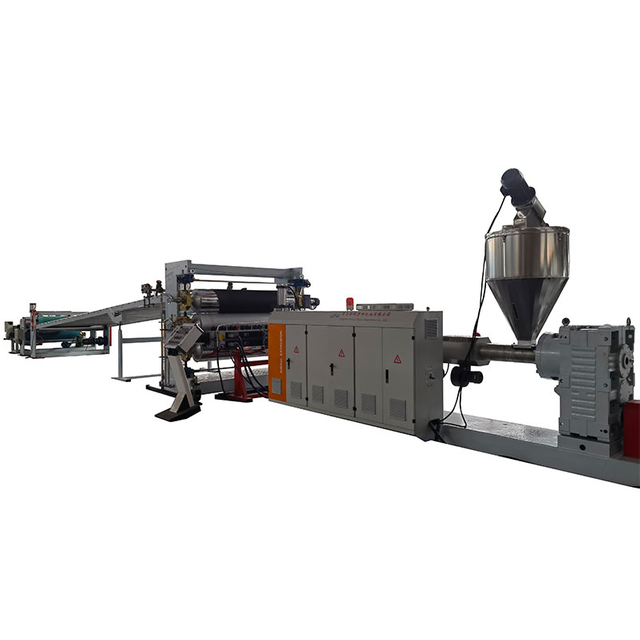
The automotive industry demands precision, durability, and safety. When we look at the floor of a modern vehicle, we see custom-fit, stylish, and functional mats. But how are these produced at scale? The answer lies in the Car Mat Sheet making Machine. This complex system transforms raw polymer granules into high-quality, textured rolls or sheets ready for vehicle interiors.
In this technical guide, we will break down the mechanics, chemistry, and engineering behind these production lines. Whether you are looking for an Automatic Car Mat Sheet making Machine or a High speed Car Mat Sheet making Machine, understanding the extrusion process is the first step to optimizing your manufacturing output.
The quality of the final product starts long before the plastic enters the barrel. For a Car Mat Sheet making Machine to produce consistent results, the raw material mix must be perfect. Most automotive mats use polymers like TPE, PVC, or EVA.
Different materials offer different benefits:
TPE Car Mat Sheet making Machine: Produces eco-friendly, odorless, and highly flexible mats.
PVC Car Mat Sheet making Machine: Known for cost-effectiveness and excellent flame retardancy.
EVA Car Mat Sheet making Machine: Offers lightweight properties and superior cushioning.
We use automated gravimetric or volumetric feeders to ensure the exact ratio of resin, masterbatch (color), and additives (like UV stabilizers or flame retardants). In an Automatic Car Mat Sheet making Machine, these feeders sync with the main extruder speed. If the ratio drifts even by 1%, the sheet color might vary, or its physical properties could fail industry standards.
Component | Function | Importance |
|---|---|---|
Resin Hopper | Stores raw polymer granules | Maintains constant supply |
Dehumidifying Dryer | Removes moisture from hygroscopic materials | Prevents bubbles/surface defects |
Auto-Loader | Transports pellets to the hopper | Reduces labor and contamination |
By maintaining a clean and precise feeding environment, we guarantee that the Car Mat Sheet making Machine operates under stable conditions, preventing downtime caused by material inconsistencies.
The extrusion stage is where the solid pellets turn into a molten polymer melt. This is the most critical phase for any High speed Car Mat Sheet making Machine.
The extruder consists of a heated barrel and a rotating screw. As the screw turns, it pushes the material forward through three zones:
Feed Zone: Moves the cold pellets away from the hopper.
Compression (Melting) Zone: The screw flight depth decreases, creating high pressure and friction that melts the plastic.
Metering Zone: Stabilizes the melt flow and pressure before it enters the die.
Single-Screw: Best for simple PVC Car Mat Sheet making Machine setups where consistent pressure is the priority.
Twin-Screw (Co-rotating): Essential for TPE Car Mat Sheet making Machine configurations. It provides superior mixing (compounding) if you are adding fillers or blending different elastomers.
We often recommend high-torque motors for a High speed Car Mat Sheet making Machine to maintain throughput without overheating the material. Overheating leads to polymer degradation, which ruins the "new car smell" and reduces the lifespan of the mat.
Once the plastic is molten, it must be shaped into a flat, wide sheet. The T-die (or coat-hanger die) performs this task. In a professional Car Mat Sheet making Machine, the die is engineered to distribute the melt evenly across the entire width.
The internal flow channel of the die looks like a coat hanger. This shape ensures that the molten plastic traveling to the edges has the same residence time and pressure as the material in the center. Without this precision, the sheet would be thicker in the middle and thinner at the edges.
Manual Die Bolts: Operators turn bolts to flex the die lip.
Automatic Die Heads: Used in an Automatic Car Mat Sheet making Machine, these use thermal expansion bolts controlled by a thickness gauge.
If you are producing Non slip Car Mat Sheet making Machine products, the base sheet must be perfectly flat before the texture is applied. Even a 0.1mm deviation can cause issues during the secondary processing or thermoforming stages.
This is where the "look and feel" of the car mat is created. The calendering unit usually consists of three or more heavy-duty rollers.
The rollers serve three main purposes:
Cooling: They remove heat from the molten sheet quickly to "set" its shape.
Sizing: The gap between the rollers determines the final thickness of the sheet.
Texturing: One of the rollers usually has a pattern (diamond, honeycomb, or leather grain) to create a Non slip surface.
To achieve a high-end finish, the Car Mat Sheet making Machine utilizes specialized rollers:
Chrome-Plated Rollers: Ensure a mirror-like finish for the bottom layer.
Embossing Rollers: These are laser-engraved. For a Non slip Car Mat Sheet making Machine, the depth of the pattern is crucial for safety and grip.
Internal Cooling Systems: We use circulating oil or water inside the rollers to maintain a precise temperature. If the roller is too hot, the plastic sticks; if it's too cold, the texture won't "take" properly.
Many modern mats aren't just one material. A TPE Car Mat Sheet making Machine might use co-extrusion to add a soft-touch top layer over a rigid core. This requires a multi-manifold die and two extruders working in tandem. The calendering unit must handle these different layers without causing delamination.
After the sheet leaves the rollers, it is still warm and needs to be handled carefully. The downstream section of the Car Mat Sheet making Machine ensures the product is retail-ready.
The sheet travels over a series of rollers (cooling bracket) where air blowers or ambient air further reduce its temperature. It is vital that the sheet cools evenly. If one side cools faster than the other, the sheet will curl (warpage).
Because the edges of the extruded sheet are usually uneven, the Automatic Car Mat Sheet making Machine includes side-cutting blades. These blades trim the sheet to the exact width required. The "scrap" edges are often fed directly into a crusher to be recycled back into the extruder, making the process zero-waste.
The haul-off unit (two rubber rollers) pulls the sheet at a constant speed. This speed must be perfectly synchronized with the extruder. Finally, the sheet is either cut into specific lengths by a flying shear or wound into large rolls by a High speed Car Mat Sheet making Machine winder.
Feature | Impact on Quality |
|---|---|
Tension Control | Prevents stretching or bunching of the sheet |
Static Eliminator | Removes electric charge, preventing dust attraction |
Auto-Stacker | Neatly piles cut sheets for easy packaging |
Modern manufacturing demands data. An Automatic Car Mat Sheet making Machine is no longer just a mechanical device; it is a computer-controlled system.
We use PLC (Programmable Logic Controller) systems from brands like Siemens or Omron. These systems monitor every motor, heater, and sensor. If the temperature in Zone 3 of the extruder drops by 2 degrees, the PLC automatically adjusts the heater power.
With a High speed Car Mat Sheet making Machine, downtime is expensive. Modern lines allow us to monitor production from a smartphone. We can track:
Kilograms produced per hour.
Energy consumption per ton.
Thickness consistency charts.
Safety is paramount. Emergency stop buttons, interlock sensors on the rollers, and enclosed gears are standard on any reputable Car Mat Sheet making Machine. These features protect your workers while maintaining high production speeds.
To keep your Car Mat Sheet making Machine running at peak performance, a strict maintenance schedule is required. Even the best Automatic Car Mat Sheet making Machine will fail without proper care.
Surging (Uneven Flow): Often caused by worn screw flights or inconsistent pellet size.
Lines on the Sheet: Usually a sign of a "die line" caused by a small piece of carbonized plastic stuck in the die lip.
Poor Texture Definition: Occurs when the calendering roller pressure is too low or the melt temperature is too high.
Weekly: Check gearbox oil levels and clean the air filters on the control cabinet.
Monthly: Inspect the heater bands for burnout and check the alignment of the haul-off unit.
Annually: Remove the screw for a deep clean and inspect the die internal surfaces for wear.
Investing in a High speed Car Mat Sheet making Machine means committing to these technical checks to ensure the Non slip and durable properties of your mats remain world-class.
The market is shifting away from generic rubber mats toward customized, high-performance materials. A versatile Car Mat Sheet making Machine allows you to adapt to these trends.
TPE Car Mat Sheet making Machine sales have skyrocketed because consumers want "green" products. TPE is 100% recyclable. Furthermore, the sheets produced by our machines are perfect for vacuum forming into 3D mats that catch liquid and dirt effectively.
Some manufacturers now add anti-microbial agents during the feeding stage. This prevents mold growth under the mats. You can also add scents to the polymer mix, providing a pleasant environment inside the vehicle.
By choosing a High speed Car Mat Sheet making Machine with modular components, you can easily swap dies or rollers to produce different styles, from heavy-duty truck liners to luxury sedan carpets.
Building a successful automotive accessory business requires the right technology. The Car Mat Sheet making Machine is the foundation of quality. From the initial mixing of TPE or PVC granules to the high-precision calendering that creates a Non slip surface, every step must be optimized. By implementing an Automatic Car Mat Sheet making Machine, you reduce human error, increase safety, and ensure that every car mat meeting the consumer's feet is durable, stylish, and perfectly manufactured.
Q1: What is the average production speed of a High speed Car Mat Sheet making Machine?
A: Depending on the thickness and material, these machines can produce between 3 to 10 meters per minute. Automatic systems help maintain this speed consistently over 24-hour shifts.
Q2: Can one machine produce both PVC and TPE mats?
A: Yes, many of our Car Mat Sheet making Machine designs are versatile. However, you may need to change the screw design or the temperature settings to handle the different rheological properties of the polymers.
Q3: How do I ensure the mats are truly Non slip?
A: This depends on two factors: the chemical formulation (adding "tackifiers") and the physical embossing pattern on the rollers. A Non slip Car Mat Sheet making Machine uses high-pressure rollers to ensure the pattern is deep and permanent.
Q4: Is it difficult to operate an Automatic Car Mat Sheet making Machine?
A: While the technology is advanced, the user interface is designed for simplicity. We provide full training, and most functions are "one-touch" once the initial recipe is set in the PLC.
As the team behind the Xinrui factory, we take immense pride in our role as a leading manufacturer in the plastic extrusion industry. We have spent years perfecting our craft, focusing on the engineering of the Car Mat Sheet making Machine to meet the rigorous demands of the global automotive market. Our facility is equipped with state-of-the-art CNC machining centers, allowing us to produce high-precision dies and rollers in-house. We don't just sell machines; we provide complete production solutions. Whether you need a High speed Car Mat Sheet making Machine for mass production or a specialized TPE Car Mat Sheet making Machine for eco-friendly products, our technical expertise ensures your investment is protected. We invite you to visit our factory to see our commitment to quality and innovation firsthand.