Views: 294 Author: Site Editor Publish Time: 2026-04-16 Origin: Site
The automotive aftermarket is booming, and at the heart of this growth lies the humble car mat. However, for manufacturers, the choice is far from simple. Choosing between TPE, PVC, and EVA determines not just the quality of the final product but also the efficiency of your Car Mat Sheet making Machine and your overall market positioning. Whether you are aiming for high-end luxury vehicles or budget-friendly mass markets, understanding these polymers is critical.
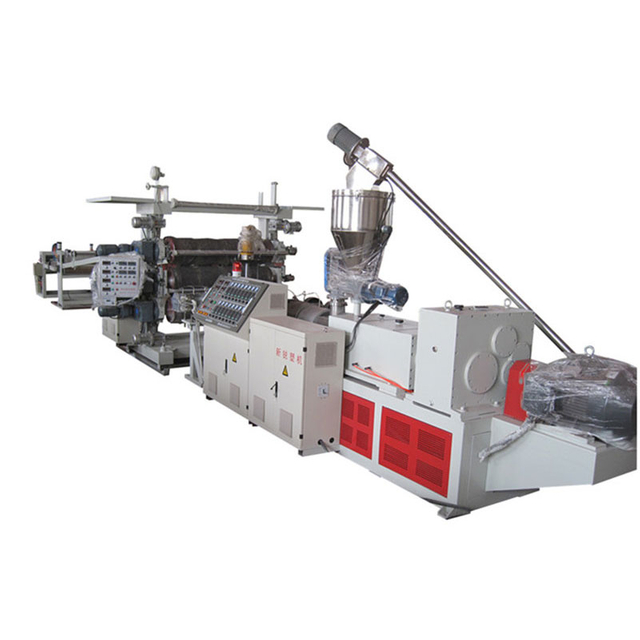
In this guide, we dive deep into the technical and commercial trade-offs of these three dominant materials. We explore how an Automatic Car Mat Sheet making Machine transforms raw resin into high-performance floor protection, and why material science is the "secret sauce" for your production line’s success.
Thermoplastic Elastomer (TPE) has revolutionized the industry. It combines the processing advantages of plastics with the performance characteristics of rubber. When you run a TPE Car Mat Sheet making Machine, you are producing a product that appeals to the environmentally conscious and quality-driven consumer.
TPE is often referred to as "synthetic rubber" because it is soft yet incredibly durable. Unlike traditional rubber, it doesn't require vulcanization, which means your High speed Car Mat Sheet making Machine can operate with shorter cycle times.
Environmental Impact: It is 100% recyclable. In a world moving toward "Green" manufacturing, TPE offers a sustainable edge.
Odorless Properties: Unlike PVC or low-grade EVA, TPE does not emit harmful Volatile Organic Compounds (VOCs). This is a massive selling point for interior car accessories.
Temperature Resilience: It stays flexible at -50°C and doesn't deform at 100°C.
When using a Car Mat Sheet making Machine for TPE, the extrusion process must be precisely controlled. The material's viscosity requires a specific screw design to ensure uniform melting. Manufacturers prefer TPE because it allows for a Non slip surface texture to be embossed directly onto the sheet during the cooling phase.
Feature | TPE Performance |
|---|---|
Durability | Exceptional |
Flexibility | High (Rubber-like) |
Recycle-ability | 100% |
Cost | Premium |
If your goal is to supply Tier-1 automotive brands, investing in a High speed Car Mat Sheet making Machine optimized for TPE is no longer optional—it is a requirement. We see more brands moving away from toxic materials toward this safe, "medical-grade" alternative.
Polyvinyl Chloride (PVC) remains the most widely used material for car mats globally. Its popularity stems from one primary factor: affordability. For high-volume factories using an Automatic Car Mat Sheet making Machine, PVC offers a predictable and profitable path.
PVC can be formulated to be rigid or highly flexible by adding plasticizers. In the context of car mats, "Soft PVC" is the standard. It provides a heavy, "planted" feel in the car footwell that many customers associate with durability.
Chemical Resistance: It resists oils, gasoline, and most acids. This makes it ideal for rugged work trucks or off-road vehicles.
Ease of Coloring: It takes pigments incredibly well. If your Car Mat Sheet making Machine is producing custom-colored mats, PVC is the easiest to manage.
Weathering: It has excellent UV resistance, meaning the mats won't fade quickly when exposed to sunlight through car windows.
While cost-effective, PVC brings challenges. The extrusion process releases hydrochloric acid fumes, which means your PVC Car Mat Sheet making Machine must be built with corrosion-resistant components. Furthermore, the global "anti-plasticizer" movement (targeting Phthalates) has forced manufacturers to use more expensive, eco-friendly additives to stay compliant with international standards.
Despite these hurdles, for the entry-level market, a Car Mat Sheet making Machine producing Non slip PVC mats provides the highest return on investment (ROI) due to the low raw material costs and high consumer demand in developing regions.
Ethylene-Vinyl Acetate (EVA) has found a unique niche, specifically in the production of "3D" and "5D" car mats. These are the deep-dish mats that cover the entire floorboard and sides of the vehicle interior. An EVA Car Mat Sheet making Machine produces foam or semi-rigid sheets that are lightweight and easy to mold.
EVA is a closed-cell foam. It doesn't absorb water, making it easy to clean. Because it is so light, it significantly reduces the shipping weight of the final product—a huge benefit for e-commerce retailers.
Shock Absorption: It provides a cushioned feel underfoot, enhancing the "luxury" perception.
Sound Insulation: The foamed structure helps dampen road noise.
Cost vs. Performance: It sits comfortably between PVC and TPE in terms of pricing.
Most high-end car mats today are composite. They might have a TPE top layer for wear resistance and an EVA bottom layer for shape retention. A specialized Car Mat Sheet making Machine can be configured for multi-layer co-extrusion, allowing you to combine these materials into a single, high-performance sheet.
When you operate an Automatic Car Mat Sheet making Machine for EVA, you must monitor the foaming agent carefully. Too much, and the mat becomes too soft; too little, and it loses its lightweight advantage.
Choosing a material isn't just about the final product; it's about the "process-ability" on your factory floor. A Car Mat Sheet making Machine is a significant investment, and it must be versatile enough to handle your chosen polymer.
Each material has a "sweet spot" for extrusion:
PVC: Requires lower temperatures (160°C - 180°C) and a high-shear screw to prevent thermal degradation.
TPE: Needs higher heat (190°C - 220°C) and a gentle screw design to maintain the integrity of the elastomer blocks.
EVA: Requires precise temperature control to trigger the foaming agent at the exact moment the material leaves the die of the Car Mat Sheet making Machine.
If you are looking for volume, a High speed Car Mat Sheet making Machine is best paired with TPE or PVC. These materials stabilize quickly, allowing for faster line speeds. EVA, due to the expansion of the foam, often requires a slightly slower cooling process to ensure the cells don't collapse.
Modern production lines favor the Automatic Car Mat Sheet making Machine. These systems use gravimetric feeders to ensure the mix of resin and additives is perfect. This reduces "off-spec" sheets and saves thousands of dollars in raw material costs annually.
To decide which material to produce, we must look at your target audience and your current Car Mat Sheet making Machine capabilities.
The Luxury Buyer: They want TPE. They care about health, the environment, and a "factory-fresh" smell. They are willing to pay a 40% premium for a Non slip TPE mat.
The Budget Buyer: They want PVC. They need something that looks decent and protects the carpet for under $30.
The Custom/Off-Road Buyer: They often prefer EVA-based 3D mats that trap mud and snow effectively.
If you are just starting, a PVC Car Mat Sheet making Machine is the easiest entry point. The technology is mature, and the material is forgiving. However, if you are looking to future-proof your business, a TPE Car Mat Sheet making Machine offers a path into the high-margin, sustainable product category.
In the EU and North America, regulations on heavy metals and phthalates make PVC production more complex. In these regions, TPE is the safest bet for long-term compliance.
No matter the material, the "look and feel" sells the product. Your Car Mat Sheet making Machine must do more than just melt plastic; it must create a functional surface.
Safety is the number one concern for car mats. A mat that slides under the brake pedal is a lethal hazard.
Backing: Most mats produced on an Automatic Car Mat Sheet making Machine feature "nibs" or "spikes" on the bottom to grip the carpet.
Top Surface: TPE offers the best natural grip, even when wet. PVC requires aggressive diamond or honeycomb patterns to achieve the same Non slip rating.
The rollers on your High speed Car Mat Sheet making Machine determine the final texture. By swapping out the embossing roller, you can switch from a rugged "off-road" look to a sleek "executive" leather-grain finish in minutes. This versatility allows a single production line to serve multiple market segments.
The industry is moving toward "Hybrid" mats. We are seeing a massive increase in requests for a Car Mat Sheet making Machine that can handle TPO (Thermoplastic Olefin) and other specialized blends.
Why choose just one material? We can now use a Car Mat Sheet making Machine to produce a three-layer sheet:
Top Layer: High-wear, Non slip TPE for aesthetics and safety.
Middle Layer: Recycled PVC or EVA for bulk and cost-saving.
Bottom Layer: High-friction coating to prevent sliding.
This "sandwich" approach allows manufacturers to lower costs while keeping the premium "TPE" label on the packaging. It requires a sophisticated Automatic Car Mat Sheet making Machine with multiple extruders feeding into a single T-die.
Sustainability is the biggest trend for 2025. Using your Car Mat Sheet making Machine to process post-industrial waste is a great way to improve margins. TPE is particularly good for this, as "regrind" can often be mixed back into virgin resin at rates up to 30% without losing significant physical properties.
A Car Mat Sheet making Machine is a workhorse, but it requires care—especially when switching between TPE, PVC, and EVA.
You cannot simply "flush" PVC with TPE. PVC leaves behind acidic residues that can degrade TPE. When switching materials, we recommend using a dedicated purging compound. This protects the mirror-finish of your Car Mat Sheet making Machine die, ensuring every sheet comes out smooth and defect-free.
PVC: Abrasive due to fillers (like calcium carbonate). It wears down the screw and barrel over time.
TPE: Can be "sticky" if the cooling rollers aren't kept at the exact right temperature.
High Speed Operations: Running at High speed increases friction. Ensure your Automatic Car Mat Sheet making Machine has an advanced liquid cooling system for the barrel.
Choosing the right material for car mat production is a balancing act between cost, performance, and market demand. PVC remains the king of volume, TPE is the champion of quality and eco-friendliness, and EVA provides the structural flexibility needed for modern 3D designs.
Ultimately, your success depends on the reliability of your equipment. A high-quality Car Mat Sheet making Machine gives you the flexibility to pivot between these materials as market trends shift. By investing in an Automatic Car Mat Sheet making Machine that handles TPE and PVC with equal precision, you ensure your factory remains competitive for years to come.
Q1: Can one machine produce TPE, PVC, and EVA?Yes, but it requires a "Universal" screw design and specific temperature controllers. Many manufacturers use a versatile Car Mat Sheet making Machine that can be adjusted for different polymers by changing the screw or the die gap.
Q2: Which material is best for "All-Weather" car mats?TPE is widely considered the best for all-weather performance. It does not crack in extreme cold or soften in extreme heat, making it the top choice for a High speed Car Mat Sheet making Machine focused on the North American or European markets.
Q3: How do I make my car mats "Non-Slip"?The Non slip property is achieved through two methods: the chemical "tackiness" of the material (TPE is best) and the mechanical pattern embossed by the rollers on your Car Mat Sheet making Machine.
Q4: Is an Automatic Car Mat Sheet making Machine worth the extra cost?Absolutely. An Automatic Car Mat Sheet making Machine reduces human error, ensures consistent sheet thickness, and significantly lowers labor costs, making your production more profitable in the long run.
At Xinrui, we don't just sell equipment; we provide the backbone for your manufacturing success. We operate from our state-of-the-art Xinrui factory, where we specialize in the design and construction of the industry's most reliable Car Mat Sheet making Machine. We have spent years perfecting our High speed and Automatic systems to handle the unique challenges of TPE, PVC, and EVA extrusion.
Our strength lies in our engineering precision. We understand that a Car Mat Sheet making Machine must be durable enough to run 24/7 while being precise enough to produce a perfect Non slip finish every time. When you choose us, you are partnering with a factory that values innovation, customer support, and the highest standards of machine longevity. We invite you to visit our facility and see firsthand how we build the future of automotive accessory production.