Views: 319 Author: Site Editor Publish Time: 2026-04-20 Origin: Site
The automotive industry faces a massive shift toward sustainability. Manufacturers no longer view environmental responsibility as an option but as a core competitive advantage. In the realm of interior accessories, the production of car mats creates significant industrial waste. Traditional methods often see edge trims and defective sheets heading straight to landfills. However, modern Car Mat Sheet making Machine technology has transformed this narrative. By integrating advanced recycling systems directly into the production line, we can turn what was once "trash" into high-quality, durable automotive components. This article explores how recycling scraps within the manufacturing process not only saves the planet but also significantly boosts profit margins by maximizing material efficiency.
Manufacturing car mats involves extruding large polymer sheets. During this process, cutting the specific shapes for vehicle floors inevitably leaves behind significant "scraps." If you use an older system, these scraps represent lost capital. In contrast, a high-efficiency Car Mat Sheet making Machine designed for circularity allows factory owners to reclaim up to 100% of industrial off-cuts.
The cost of raw materials like TPE, PVC, and EVA fluctuates globally. Relying solely on virgin resin leaves your bottom line vulnerable to market volatility. By implementing a closed-loop system, you insulate your business from these price hikes. Furthermore, "Green Manufacturing" certifications open doors to contracts with major EV manufacturers who demand sustainable supply chains.
Benefit Category | Impact of Recycling Scraps |
|---|---|
Material Cost | Reduces virgin resin dependency by 20-30%. |
Waste Management | Eliminates landfill fees and reduces environmental footprint. |
Brand Image | Positions the factory as an eco-conscious partner. |
Productivity | Re-integrating scraps maintains a steady flow of material. |
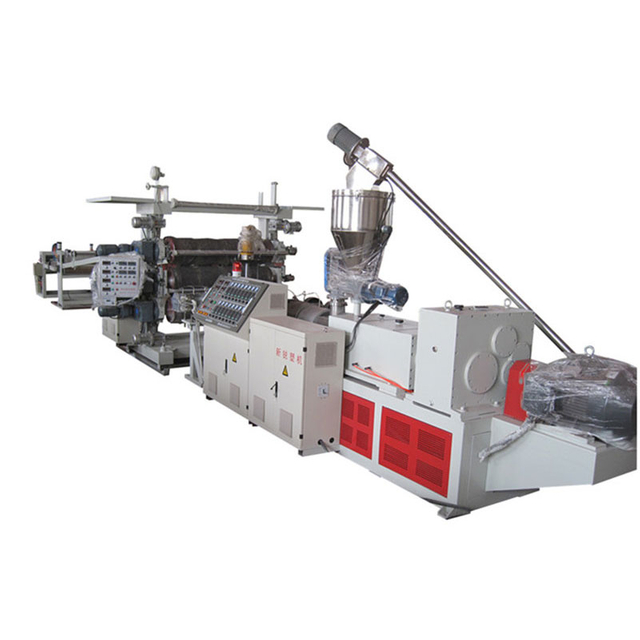
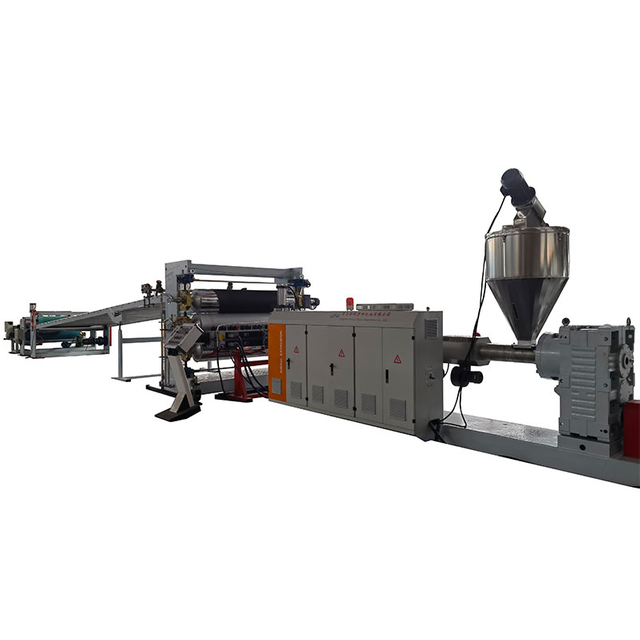
How does the machinery actually handle these scraps? It isn't just about throwing old plastic back into a hopper. Precision engineering ensures that the recycled content doesn't degrade the final product’s quality. A High speed Car Mat Sheet making Machine utilizes specialized grinders and feeders to ensure a consistent mix.
First, workers or robotic arms collect the edge trims. They feed them into a heavy-duty granulator. This machine breaks down the Non slip material into uniform pellets. These pellets must match the size of virgin resin to ensure even melting inside the extruder barrel.
We often use multi-layer co-extrusion. The Automatic Car Mat Sheet making Machine can sandwich a core layer made of recycled scraps between two thin layers of virgin TPE or PVC. This preserves the aesthetic finish and the Non slip properties of the surface while utilizing recycled material for the bulk of the mat's thickness.
Different polymers require different handling strategies. Understanding the chemical behavior of your feedstock is vital for maintaining the structural integrity of the sheet.
TPE is a favorite in the premium car mat market because it is 100% recyclable. Unlike rubber, it can be melted and reshaped multiple times without losing its elastic properties. A TPE Car Mat Sheet making Machine typically features a vacuum degassing system. This removes any moisture or impurities picked up during the scrap collection process, ensuring the final sheet is free of bubbles or "fish eyes."
PVC and EVA are also highly recyclable, but they require tighter temperature control. If you overheat PVC scraps, they can release corrosive gases that damage the screw of your Car Mat Sheet making Machine. Modern control systems monitor the melt temperature in real-time, adjusting the cooling zones to prevent thermal degradation.
Industrial Shredders: High-torque blades to handle reinforced materials.
Proportional Mixers: Ensures a precise 70:30 or 80:20 ratio of virgin to recycled material.
Magnetic Separators: Removes any metal contaminants before they reach the extruder.
Is the investment in a recycling-ready Car Mat Sheet making Machine worth it? Let's look at the numbers. While a High speed machine with integrated recycling features might have a higher upfront cost, the payback period is remarkably short.
Imagine a factory producing 1,000 tons of car mat sheets annually. With a standard 15% scrap rate, 150 tons of material are traditionally wasted. If the cost of PVC or TPE is $1,500 per ton, that is $225,000 vanishing every year. By utilizing an Automatic Car Mat Sheet making Machine with an efficient recovery system, you reclaim that value minus the small cost of electricity for the granulator.
Modern machines are built with energy-saving motors (often Siemens or ABB). These reduce the "energy-per-kg" cost. When you combine energy savings with material recovery, the profitability of each roll of Non slip matting increases significantly. This allows you to offer more competitive pricing to wholesalers without sacrificing your margins.
The biggest fear manufacturers have is that recycled content will lead to a "cheap" feeling product. This section explains how to maintain high standards.
Recycled material can sometimes introduce color variations. To solve this, the Car Mat Sheet making Machine uses masterbatch dosing systems. These automatically inject pigments to neutralize any color shifts caused by the recycled scraps.
Does a recycled mat tear easier? Not if processed correctly. The key is maintaining the polymer chain length. We recommend using a High speed Car Mat Sheet making Machine that employs a "short-path" extrusion process. This minimizes the time the plastic spends at high heat, preserving its strength.
Tensile Strength Test: Ensure the sheet meets OEM standards.
Odorous Emissions: Recycled materials must be cleaned to ensure the "new car smell" isn't ruined by chemical odors.
Flexibility at Low Temps: Essential for car mats used in cold climates.
Uniform Thickness: Using an Automatic T-die adjustment system to prevent thinning.
The industry is moving toward "Bio-plastics" and even higher recycling rates. We are seeing a shift where the Car Mat Sheet making Machine of the future will be capable of processing not just in-house scraps, but also "End-of-Life" (EOL) car mats returned by consumers.
Smart sensors now track the "DNA" of the material. A Car Mat Sheet making Machine equipped with IoT sensors can notify the operator if the scrap-to-virgin ratio is causing a drop in viscosity. This allows for mid-production adjustments, preventing the creation of even more waste.
Recycling is easier when the whole mat is made of one material (like pure TPE). Modern Automatic lines are being optimized to produce these mono-material sheets that are vastly easier to recycle than composite mats with glued-on carpets or foam backings.
To truly excel in eco-friendly manufacturing, speed and automation must go hand-in-hand with sustainability. A High speed Car Mat Sheet making Machine doesn't just produce more; it produces better.
An Automatic Car Mat Sheet making Machine handles everything from material loading to finished roll winding. This consistency is crucial when working with recycled content. Humans might vary the scrap mix ratio; a computer does not. This leads to a perfectly uniform Non slip surface every single time.
If your factory operates at a high volume, even a 1% improvement in material recovery results in tons of saved resources. The latest Car Mat Sheet making Machine models feature wider T-dies and faster cooling rollers to maximize output while maintaining the structural integrity of the EVA or TPE sheets.
Recycling scraps in car mat sheet production is the ultimate "win-win." It fulfills the urgent global need for sustainable manufacturing while simultaneously slashing production costs. By investing in a high-quality Car Mat Sheet making Machine, specifically a High speed and Automatic model, you position your factory at the forefront of the green revolution. Whether you are working with TPE, PVC, or EVA, the ability to reclaim and reuse your industrial waste is the clearest path to long-term profitability and environmental stewardship.
At our Xinrui factory, we don't just build machinery; we engineer solutions for a sustainable future. We have spent years refining our Car Mat Sheet making Machine technology to ensure that our clients can achieve the highest possible recycling rates without compromising on the Non slip quality or durability of their products. Our strength lies in our deep understanding of polymer science and our dedication to robust, Automatic industrial design. We invite you to visit our facilities and see firsthand how our high-precision lines turn raw materials and scraps into world-class automotive components. We pride ourselves on being more than a supplier—we are your partner in efficient, eco-friendly manufacturing.
Q: Can I use 100% recycled material in my Car Mat Sheet making Machine?A: While it is technically possible, we usually recommend a blend (e.g., 30-50% recycled) for the top layer to ensure the best Non slip performance and aesthetic finish. The core or bottom layers can often utilize much higher percentages of recycled TPE or PVC.
Q: Does recycling scraps affect the "Non slip" property of the mat?A: No, as long as the surface texture is embossed correctly by the cooling rollers. The High speed Car Mat Sheet making Machine uses precision rollers to "stamp" the pattern onto the sheet while it is still semi-molten.
Q: Is it difficult to switch between TPE and PVC on the same machine?A: It requires a thorough cleaning of the screw and barrel. However, a modern Automatic Car Mat Sheet making Machine is designed with "quick-clean" features to minimize downtime during material changeovers.
Q: What is the average lifespan of a High speed Car Mat Sheet making Machine?A: With proper maintenance, a professional-grade machine from a reputable factory like Xinrui can operate for 15-20 years.
Q: Do I need extra staff to manage the recycling part of the machine?A: Not necessarily. Because the systems are Automatic, the granulator and feeder often run as an integrated part of the main line, requiring minimal manual intervention.