Views: 0 Author: Site Editor Publish Time: 2026-05-27 Origin: Site
Modern luggage manufacturing demands a difficult balance. You must achieve high impact resistance, premium aesthetics, and strict cost control. Consumers expect hard-shell suitcases to survive harsh baggage handling while looking flawless on the carousel. Traditional mono-layer sheets struggle to meet these conflicting demands without severely inflating material costs. Post-production lamination attempts to solve this but introduces secondary processing expenses. It also creates critical physical weaknesses. Adhesive films often peel away under extreme temperature shifts or rough transit impacts. You cannot afford delamination risks or excessive premium resin expenses.
Multi-layer coextrusion solves this engineering paradox. It bonds different polymers at the molecular level in a single step. This process creates a unified, highly resilient material shell. It delivers the exact performance you need without the vulnerabilities of secondary gluing. This guide breaks down the specialized engineering behind the process. We will explore equipment evaluation criteria and the daily production realities of manufacturing multi-layer ABS/PC luggage sheets. You will learn how to optimize resin allocation and configure your extrusion machinery for maximum reliability.
Multi-layer coextrusion utilizes an A/B/A or A/B/C structure to optimize cost (using regrind/standard ABS in the core) while maximizing surface durability (using premium PC or colored ABS on the exterior).
Unlike lamination, coextrusion eliminates physical delamination risks through molecular bonding.
Selecting the right ABS PC sheet machine requires choosing between Feedblock and Multi-Manifold dies based on polymer viscosity differences.
Implementing multi-layer sheet extrusion requires precise control over melt flow rates, cooling roller temperatures, and screw design to prevent interfacial instability and material degradation.
Mono-layer structures force a harsh engineering compromise. You either get flexibility or you get surface hardness. You rarely achieve both simultaneously. If you produce a sheet using 100% Polycarbonate (PC), you gain extraordinary impact resistance. However, your raw material costs will skyrocket beyond mass-market viability. If you use pure ABS, you save significant money. Yet, the outer surface becomes highly prone to scratching and UV degradation over time. Post-production lamination introduces secondary processing costs. Furthermore, it creates a high risk of peeling and delamination when the luggage suffers a sharp impact.
The A/B/A and A/B/C sandwich structures eliminate this physical paradox entirely.
Outer Layer (Cap Layer): Manufacturers typically assign Polycarbonate (PC) or high-grade colored ABS to this zone. It provides essential UV resistance. It delivers a striking high-gloss or matte finish. Most importantly, it ensures crucial scratch resistance against abrasive conveyor belts.
Core Layer: This central section utilizes standard ABS or recycled regrind. It provides vital structural impact absorption. It gives the suitcase its core rigidity. Functionally, it drives massive cost reductions by hiding cheaper materials inside the shell.
Inner Layer: This zone utilizes flexible ABS. Alternatively, you can deploy a specific bonding layer. Engineers optimize this inner surface for subsequent thermoforming processes and strong interior lining adhesion.
This approach delivers a powerful business outcome. It significantly reduces your reliance on expensive masterbatches and premium virgin resins. You confine these costly materials to a very thin outer layer. This premium cap often constitutes less than 15% of the total shell thickness. Such strategic material placement heavily optimizes overall luggage sheet production costs.
Chart: Multi-Layer Luggage Sheet Material Allocation | |||
Layer Position | Typical Material | Thickness Ratio | Primary Engineering Function |
|---|---|---|---|
Outer (A) | Virgin PC / Premium ABS | 10% - 15% | Aesthetics, UV defense, scratch resistance |
Core (B) | Standard ABS / Regrind | 70% - 80% | Rigidity, impact absorption, cost reduction |
Inner (A or C) | Flexible ABS | 10% - 15% | Thermoforming stability, fabric adhesion |
We must define the process clearly. Manufacturers utilize two or more extruders simultaneously. They feed differently viscous molten plastics into a single extrusion die. This creates a unified product featuring distinct functional zones. The process eliminates secondary assembly steps completely.
Managing polymer rheology represents your most critical daily challenge. Success in multi-layer coextrusion dictates strict material compatibility. Polymers must exhibit highly compatible melt temperatures. They must demonstrate similar flow behaviors under extreme pressure. A high-viscosity core must sit perfectly enveloped by lower-viscosity outer layers. If the outer layer flows too sluggishly, the fast-moving core will physically tear it apart inside the die. This dynamic causes severe surface defects.
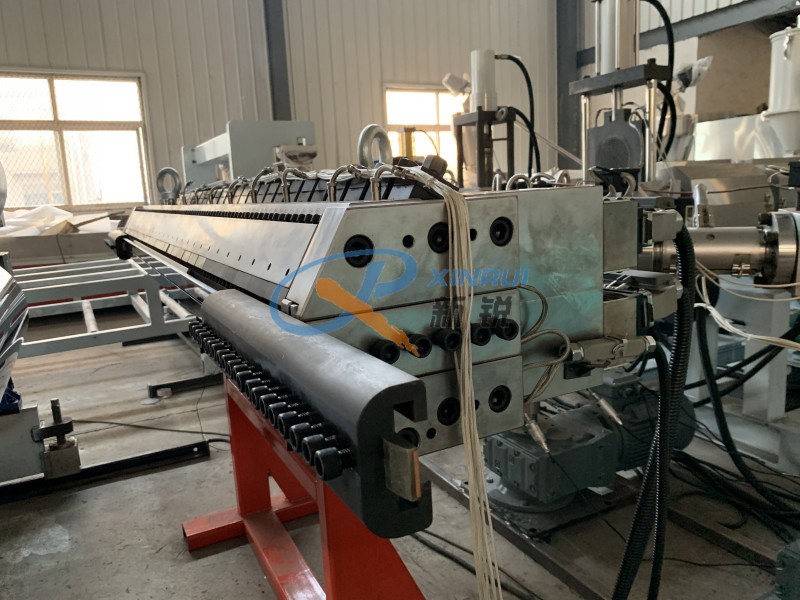
Die design selection ultimately dictates your final product quality. You must choose the right mechanical system based directly on your polymer selection.
Die Technology | Merging Point | Best Application Use Case | Cost Profile |
|---|---|---|---|
Feedblock Systems | Upstream of the die body | Materials sharing very similar viscosities (e.g., Virgin ABS + Regrind ABS). | Highly cost-effective. Standard industry choice. |
Multi-Manifold Dies | Near the final die exit | Materials possessing vastly different flow characteristics (e.g., PC + Standard ABS). | High equipment CAPEX. Essential for complex resin pairs. |
Evaluating your extruder and screw design requires precision. Twin-screw versus single-screw configurations dominate the industry discussion. Co-rotating twin screws offer vastly superior compounding capabilities. They excel for processing the core layer. This proves especially true when you integrate heavy amounts of regrind. They mix additives and recycled flakes thoroughly before reaching the die.
You must consider Length to Diameter (L/D) ratios carefully. They typically range from 25:1 to 40:1. A longer barrel ensures complete plastic melting. However, operators must avoid generating excessive shear heat. Too much friction actively degrades the ABS rubber phase. The vital butadiene component burns easily under high shear, destroying the final sheet's impact resistance.
Filtration and pressure control dictate continuous output stability. You must utilize advanced hydraulic screen changers. Breaker plates filter microscopic impurities from core-layer regrind. They also establish stable internal backpressure. This pressure often exceeds 3,000 to 5,000 psi. Consistent pressure guarantees uniform polymer delivery to the die.
Calendering and cooling determine the final aesthetic finish. Plastic conducts heat extremely slowly. It cools roughly 2000 times slower than steel. The multi-roll calendering stack handles this massive thermal load. These motorized chill rolls prove absolutely critical. They do not just cool the hot polymer web. They dictate the exact final sheet thickness. They also physically emboss the definitive luggage texture. You achieve diamond, matte, or carbon fiber patterns directly via these textured cooling rolls.
We must address common manufacturing hurdles objectively. Perfecting ABS sheet extrusion requires rigorous daily troubleshooting and deep technical awareness.
Interfacial instability represents a frequent headache. You might notice distinct wave patterns inside the transparent outer layers. This phenomenon happens due to velocity mismatches between the thick ABS core and the thin PC cap layers. To solve this, operators must balance flow speeds via localized PID temperature zoning. Fine-tuning the internal restrictor bars inside the die also helps equalize these fluid velocities.
Delamination in dissimilar polymers remains a catastrophic failure mode. Sometimes outer layers peel apart completely after cooling. If you utilize highly dissimilar resins, natural chemical bonding fails. An adhesive "tie layer" may become strictly necessary. This microscopic intermediate layer acts as an interfacial stress reliever. It glues chemically incompatible plastics together permanently.
Recycling constraints impact your overall profitability. Coextrusion allows extensive use of regrind inside the core. However, the resulting scrap introduces operational challenges. Multi-polymer scrap mixes ABS directly with PC. This complex blend proves much harder to recycle internally than pure mono-layer scrap. You require careful regrind ratio management. Adding too much mixed scrap degrades the structural integrity of the core layer over multiple cycles.
Moisture and bubble defects routinely destroy production runs. Both ABS and PC exhibit highly hygroscopic properties. They absorb moisture aggressively straight from the ambient air. Inadequate vacuum venting on the extruder barrel spells disaster. Insufficient pre-drying leads directly to internal voids. Surface blisters will ruin the premium cap layer instantly. Always run robust desiccant dryers for hours before feeding the hoppers.
Purchasing industrial equipment requires strategic evaluation. You cannot simply look at the sticker price.
Consider the balance between initial CAPEX and Long-Term ROI. Multi-extruder setups carry a significantly larger physical footprint. They demand a higher initial capital cost than mono-layer setups. However, they deliver rapid ROI through massive material savings. You bury cheap regrind safely in the core. You only purchase expensive virgin resins for the ultra-thin outer layer.
Scalability and Automation define modern production efficiency. You must evaluate the electronic controls closely.
Evaluate the PLC integration depth. Ensure it communicates seamlessly across all extruders.
Demand automatic die profiling capabilities. This ensures precise thickness control across the entire web.
Install gravimetric dosing systems. They ensure perfectly consistent layer ratios and prevent operators from manually wasting expensive color masterbatches.
Vendor capabilities and Factory Acceptance Testing (FAT) validate your large investment. Ensure the manufacturer can actually demonstrate stable layer distribution. They must achieve this specific distribution at your target throughput speeds during the FAT. Also, look closely for localized technical support. You will need fast access to critical spare parts like specialized screws, heated barrels, and ceramic heating bands.
Transitioning your factory processes represents a strategic necessity. Luggage manufacturers must constantly balance premium retail aesthetics with aggressive raw material cost management. Producing a world-class luggage sheet demands modern coextrusion techniques. Embracing this engineering framework protects your margins while delivering superior consumer durability.
To move forward effectively, consider these actionable next steps:
Audit your current factory material mix to understand exact virgin versus regrind consumption.
Calculate exact potential resin savings achievable from adopting an A/B/A structural setup.
Initiate technical discussions with machinery vendors focusing heavily on die capability.
Tailor equipment specifications directly to your unique, proprietary ABS and PC formulations.
A: It typically ranges from 0.8mm to 3.0mm. The exact thickness depends heavily on the specific luggage size. Carry-on bags require thinner sheets for weight savings. Checked baggage demands thicker gauges to survive heavy impacts and automated airport handling systems.
A: Yes, you can retrofit older machines. You achieve this by adding auxiliary co-extruders. You must also replace the simple mono-die with a specialized feedblock and coextrusion die system. However, you must carefully evaluate available floor space and line control integration.
A: 100% PC offers maximum impact resistance but remains severely cost-prohibitive for mass-market luggage. Co-extruding a thin PC outer layer over a thick ABS core provides the premium finish and scratch resistance of PC at a fraction of the raw material cost.