
Views: 0 Author: Site Editor Publish Time: 2025-11-22 Origin: Site
The plastic industry has undergone significant transformations over the last few decades, driven by the evolving needs of the market and advancements in technology. One of the most crucial innovations in this field is the development of sheet extrusion lines, which have become integral to manufacturing a wide range of plastic products used in various industries, from packaging to construction. As demand for higher-quality products and greater efficiency increases, sheet extrusion lines are also evolving. Today, automation and energy efficiency are two critical trends that are shaping the future of these production systems.
Before delving into the trends, it’s important to understand what sheet extrusion is and why it matters in modern manufacturing. Sheet extrusion is a process that involves melting plastic pellets and forming them into continuous sheets. These sheets are then cooled, cut, and often processed further to make a variety of products, such as packaging materials, automotive components, and construction materials. The extrusion process allows manufacturers to create products with consistent thickness and surface quality, which are essential for many applications.
Extruders play a pivotal role in this process. Extruder machines melt and process the plastic, feeding it through a die to create the desired sheet thickness and width. These machines are designed to handle a variety of materials, including polyethylene (PE), polypropylene (PP), polystyrene (PS), and other thermoplastics, each serving different industry needs. The continuous demand for faster production speeds, higher product quality, and lower operational costs has led to innovations in automation and energy efficiency in sheet extrusion lines.
The trend toward automation in sheet extrusion lines is arguably one of the most significant advancements in the industry in recent years. With increased demand for higher production volumes, faster turnaround times, and superior product quality, automation technology has played a pivotal role in transforming how extrusion lines are set up, operated, and maintained. By integrating automation into the process, manufacturers can achieve better productivity, improved precision, and a reduction in labor costs, all while enhancing overall efficiency.
Traditionally, extrusion lines relied heavily on manual intervention, with operators adjusting settings, monitoring the process, and troubleshooting issues throughout production. This method was time-consuming and prone to human error, leading to inconsistencies and inefficiencies. Today, automation has significantly reduced the need for manual labor by integrating advanced control systems capable of adjusting machine settings automatically, optimizing production parameters, and providing real-time feedback on machine performance.
Automated systems in modern extruder machines ensure that critical parameters like temperature, pressure, and speed are continuously monitored and adjusted to maintain optimal performance. This level of precision reduces the risk of production errors, such as uneven sheet thickness, surface imperfections, or warping. For example, a system equipped with sensors can automatically adjust to variations in raw material properties or ambient conditions, ensuring a consistent and high-quality output.
These automated processes lead to better overall product quality by minimizing human error and ensuring that every sheet produced meets the desired specifications. The ability to continuously fine-tune the extrusion process without human intervention helps manufacturers achieve greater consistency, reduce waste, and lower production costs over time.
As artificial intelligence (AI) and machine learning technologies advance, they are becoming increasingly integral to the automation of sheet extrusion lines. These innovations can analyze production data in real-time, detect patterns, and predict potential failures before they occur, helping operators stay ahead of any issues.
For example, AI-powered systems can learn from historical data to optimize extrusion parameters based on past trends and adjust the process in real-time. This helps to fine-tune machine settings and improve energy efficiency, resulting in lower energy consumption and reduced operational costs. Additionally, AI systems can predict when maintenance is required by analyzing wear patterns and identifying early signs of equipment failure. This predictive maintenance capability helps manufacturers avoid unexpected breakdowns and production stoppages, thereby reducing downtime and ensuring smooth operations.
By integrating AI into extrusion lines, manufacturers can achieve an unprecedented level of automation that not only improves efficiency but also reduces the reliance on human operators. AI and machine learning also enable systems to continuously improve, learning from each cycle of production to enhance future performance. This smart technology optimizes the entire extrusion process, increasing the potential for continuous improvement in both quality and efficiency.
With the rise of Industry 4.0, smart technologies such as remote monitoring and control are transforming how extrusion lines are managed. Operators no longer need to be physically present on-site to oversee the production process. Instead, cloud-based systems enable manufacturers to access real-time data from anywhere in the world, offering unprecedented flexibility and convenience.
Remote monitoring allows operators to oversee multiple production lines simultaneously, even if they are spread across different geographic locations. This centralized control system ensures that operators can make faster decisions, troubleshoot issues quickly, and address potential problems before they disrupt production. Remote connectivity also enables operators to adjust machine settings, monitor key parameters, and receive updates on machine performance without having to be physically on-site.
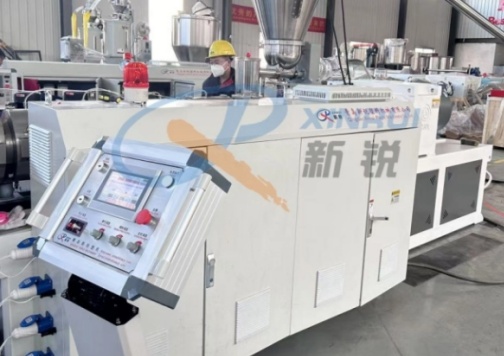
As energy prices continue to rise and environmental concerns grow, manufacturers are increasingly focusing on improving the energy efficiency of their production lines. The extrusion process is energy-intensive, as it requires the heating and cooling of large volumes of plastic. However, recent advancements in energy-efficient technologies have helped reduce the energy consumption of extruder machines and other components of the extrusion line.
One of the most significant areas of improvement in energy efficiency is the development of more efficient heating systems. Traditional extrusion lines rely on electric or gas-powered heating elements that can be inefficient, leading to high energy consumption. Newer machines are incorporating advanced heating technologies, such as infrared heaters and induction heating, which are more energy-efficient and provide better control over temperature management. These systems allow for more precise heating, reducing the need for excess energy while maintaining optimal processing conditions.
In addition, some extruder machines are now equipped with energy recovery systems that capture waste heat from the extrusion process and reuse it in the system. This helps minimize energy loss and further reduces operational costs. By optimizing heating and cooling processes, manufacturers can achieve a significant reduction in energy consumption, which is not only cost-effective but also environmentally beneficial.
Another area where energy efficiency is being improved is in the cooling process. In sheet extrusion, cooling is essential to solidify the plastic sheets once they are formed. However, traditional cooling systems often require large amounts of water or air, which can be wasteful and inefficient. Modern extrusion lines are using closed-loop cooling systems, which recycle water and reduce the amount of water used in the process. These systems also feature better insulation and more efficient heat exchangers, further improving the overall energy efficiency of the cooling stage.
Motors and drives are key components of any extrusion line, and they can significantly impact energy consumption. Advances in motor and drive technology have led to the development of more energy-efficient components. For instance, variable-frequency drives (VFDs) allow for better control of motor speed, adjusting the power needed based on real-time requirements rather than running at a constant speed. This reduces unnecessary energy consumption and helps optimize overall production efficiency.
The growing focus on sustainability has also influenced the evolution of sheet extrusion lines. Consumers and industries alike are demanding more environmentally friendly products, which has pushed manufacturers to adopt sustainable practices. As a result, sheet extrusion lines are becoming more energy-efficient, and the use of recycled materials is increasing. Recycled plastic pellets are now commonly used in the extrusion process, reducing the demand for virgin materials and contributing to a circular economy.
The implementation of underground waste collection systems is another step toward sustainability. By using underground systems to sort and store waste, manufacturers can ensure that excess materials are properly recycled or reused, reducing their environmental footprint.
For businesses looking to stay competitive in the evolving sheet extrusion market, embracing automation and energy efficiency is crucial. By investing in extruder machines with advanced automation features, manufacturers can streamline production, reduce labor costs, and improve product quality. Similarly, adopting energy-efficient technologies can significantly lower operational costs and help businesses meet their sustainability goals.
It’s important for companies to stay informed about the latest technological advancements in the industry and partner with reliable suppliers who can provide high-quality, innovative machinery. With the right equipment and strategies, businesses can not only improve their bottom line but also contribute to a more sustainable future.
At Qingdao Xinrui Plastic Machinery Co., Ltd., we specialize in providing cutting-edge solutions for sheet extrusion lines, including energy-efficient and automated systems. Our machines are designed to help you maximize productivity while minimizing energy consumption, ensuring your business remains competitive in an increasingly eco-conscious market.
For more information or to explore how our products can meet your needs, feel free to reach out to Qingdao Xinrui Plastic Machinery Co., Ltd. today. We’re here to help you navigate the evolving trends in sheet extrusion and provide the support you need to succeed in this rapidly changing industry.


