Views: 0 Author: Site Editor Publish Time: 2026-06-07 Origin: Site
Expanding production capacity or entering high-margin markets requires versatile, high-output equipment. The automotive accessories and home goods sectors offer immense profit potential for manufacturers ready to scale. However, balancing production speed against product quality remains a core operational challenge. You must achieve consistent anti-slip properties, superior durability, and precise thickness across varying formulations. Inconsistent extrusion can easily ruin entire production batches.
This article provides a strict evaluation framework for selecting a reliable PVC mat making machine. We deliberately cut through common marketing claims to focus entirely on operational realities and real-world returns. You will discover how to assess machine mechanics, navigate procurement strategies, and mitigate implementation risks effectively. By understanding these technical nuances, you can secure equipment engineered for long-term profitability and seamless market adaptability.
A versatile PVC mat extrusion line can serve dual markets—heavy-duty automotive and soft-touch residential—by minimizing mold changeover times and supporting variable compound inputs.
Machine profitability hinges on energy efficiency, scrap reduction, and automation levels, rather than just upfront capital expenditure.
Evaluating a supplier requires scrutinizing Factory Acceptance Tests (FAT), localized spare parts availability, and compliance with industrial safety standards (CE/ISO).
Facility readiness, including cooling infrastructure and power stability, is a non-negotiable prerequisite for successful deployment.
Modern manufacturers must remain agile. Serving a single industry limits your growth potential. A well-configured machine allows you to pivot between distinct product lines. We will explore how different market demands dictate specific equipment capabilities.
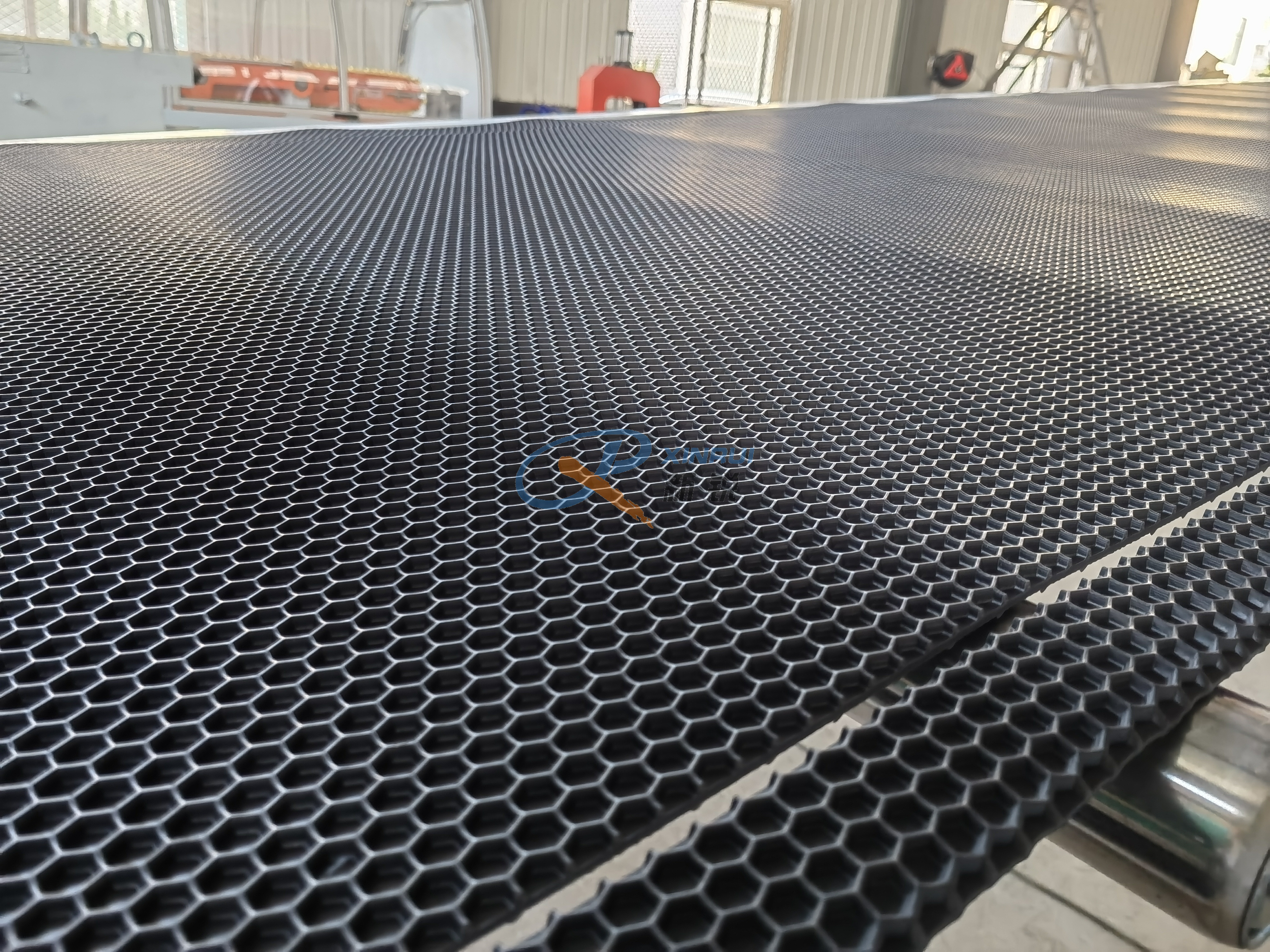
Automotive accessories endure extreme wear. Consumers expect mats to resist friction, dirt, and moisture constantly. Producing these items requires a robust car mat machine. You must process higher-density PVC compounds effectively. The equipment must integrate heavy-duty molding and embossing rollers. These rollers impart deep textures necessary for dirt retention and grip.
Success in this sector depends on specific technical criteria:
Dimensional stability: Products must resist warping under intense vehicle cabin temperature fluctuations.
High wear resistance: The surface formulation must withstand constant heel friction without degrading.
Precise die-cutting integration: Extruded sheets require accurate, rapid downstream cutting to match varied vehicle floorboards.
Residential applications present entirely different requirements. Consumers prioritize underfoot comfort and safety in wet environments. A reliable bathroom mat making machine processes softer, highly plasticized formulations. Operators frequently incorporate foaming agents to reduce weight and increase cushioning.
The success criteria for residential and commercial mats include:
Uniform thickness: Foaming agents can cause uneven expansion if temperatures fluctuate. Strict thermal control prevents this issue.
Water-drainage design: Calendering rollers must imprint precise structural patterns to channel water away rapidly.
Color consistency: Residential buyers demand aesthetic perfection. Automated dosing ensures exact color matching across different batches.
Purchasing separate lines for these two markets wastes capital. A premium PVC anti-slip mat machine offers modular flexibility. Operators can configure modular calendering rolls and adjustable die heads. You can switch between heavy-duty automotive profiles and soft-touch residential textures efficiently. Quick-change mold mechanisms minimize downtime during these transitions. This versatility drastically accelerates your return on investment.
Understanding internal mechanics helps you differentiate between standard and premium equipment. Every component impacts final product quality. We will break down the critical zones of a production line.
Consistent products start before the plastic melts. Automated dosing systems are crucial. They measure raw PVC resin, plasticizers, and colorants precisely. Manual mixing introduces human error. It causes color variations and inconsistent material flow. High-end machines utilize gravimetric feeders. They adjust material input dynamically based on weight. This guarantees batch-to-batch consistency across extended production runs.
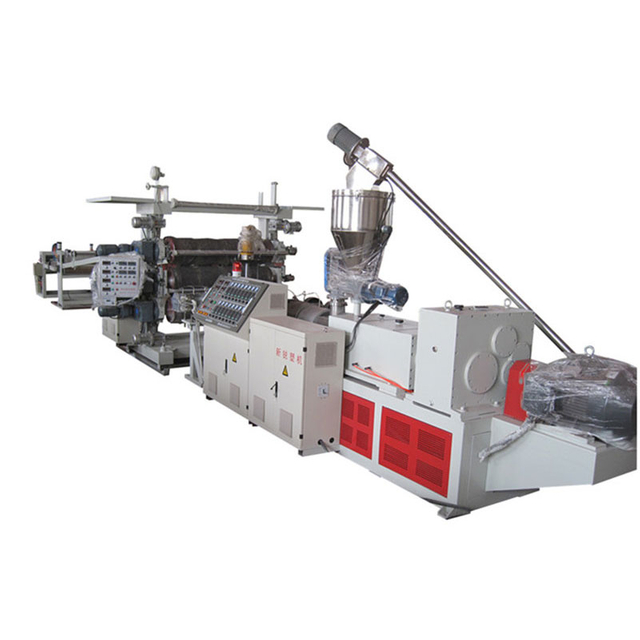
The extruder acts as the heart of the operation. You must choose the right screw configuration for your compound complexity. Proper PVC mat extrusion relies on optimal shear and melt temperatures.
Extruder Type | Best Use Case | Material Handling | Output Volume |
|---|---|---|---|
Single-Screw | Standard solid mats, pre-compounded pellets. | Requires well-premixed materials. Lower shear mixing. | Moderate to high, depending on screw diameter. |
Twin-Screw | Foamed mats, complex multi-additive formulations. | Excellent dispersive mixing. Can handle powder directly. | Very high, offers superior melt homogeneity. |
Once the material melts, it enters the T-die. The T-die distributes the polymer uniformly across its width. Poor die design causes edge variations and thickness defects. After exiting the die, the melt enters the calendering section. Cooling and embossing rollers dictate the final anti-slip texture. The gap between these rollers determines material gauge precisely. Robust chilling systems inside the rollers lock the texture into the plastic instantly.
Downstream automation defines your packaging efficiency. Bulk distributors prefer automated roll-winding stations. These stations maintain constant tension to prevent stretching the warm material. Conversely, direct-to-consumer manufacturers require inline hydraulic cutting. Optical sensors trigger the cutting blade at precise intervals. This delivers ready-to-sell floor mats directly off the belt.
Evaluating vendor specifications requires a critical eye. Nameplate specifications rarely reflect actual factory conditions. You must assess operational resilience.
Suppliers often advertise theoretical kg/hr metrics. These numbers assume perfect conditions. You must assess realistic operational yield instead. Calculate actual output by factoring in maintenance stops. Account for material purge times during color changes. A machine rated for 500kg/hr might only yield 400kg/hr of sellable product. Ask vendors for empirical yield data based on your specific formulation.
Electricity consumption severely impacts your operating margins. Heavy extrusion requires massive energy inputs. You can mitigate this through smart component selection.
Insulated barrel heaters: Ceramic insulation bands prevent ambient heat loss. They reduce heater activation cycles significantly.
Variable Frequency Drives (VFDs): VFDs adjust motor speeds dynamically based on load. They prevent power surges during startup.
Efficient water-cooling: Closed-loop chiller systems recycle treated water. They maintain strict thermal parameters while reducing utility bills.
Skilled operators are increasingly difficult to retain. Modern PLC control systems bridge this gap. Top-tier machines utilize reputable platforms like Siemens or Allen-Bradley. These interfaces offer comprehensive recipe storage. An operator simply selects a product profile, and the machine adjusts temperatures automatically. Automated fault diagnostics isolate sensor failures instantly. This reduces diagnostic downtime from hours to minutes. It also minimizes reliance on highly specialized technicians.
Cheap components fail rapidly under continuous industrial use. Prolonged downtime destroys profitability. You must verify internal parts sourcing. Demand internationally recognized electrical and pneumatic components. Look for contactors, relays, and directional valves from brands like Schneider, Omron, or Festo. Standardized parts ensure you can source replacements locally. Proprietary, generic components leave you stranded during a breakdown.
A successful purchase means nothing if your facility cannot support the equipment. Pre-installation planning prevents disastrous delays. You must evaluate your physical and operational readiness.
Extrusion lines command a massive physical footprint. You must measure your factory floor meticulously. Account for raw material staging and finished goods storage at both ends. Verify your electrical load prerequisites early. A high-output line draws substantial amperage. Additionally, the calendering section necessitates a robust chilled water supply. Inadequate cooling capacity will deform your products. It limits your line speed directly.
Industrial machinery presents severe pinch and burn hazards. Protecting your workforce is paramount. You must verify all safety protocols before finalizing a purchase.
Test multiple emergency stop mechanisms along the entire line length.
Ensure rigid safety interlocks exist on all moving parts and roller guards.
Demand strict compliance with regional machinery directives, such as CE or ISO certifications.
Extrusion startup always generates scrap material. You must develop strategies for managing this waste. Some formulations allow immediate repelletizing. Evaluate the machine's compatibility regarding recycled PVC or regrind material. Processing a 20% regrind ratio can improve profit margins substantially. However, the extruder screw must feature a design capable of melting regrind uniformly alongside virgin resin.
Every machine experiences wear. Identifying high-wear components early prevents catastrophic failures. The screw and barrel endure severe abrasion, especially when processing calcium carbonate fillers. Heating bands also degrade over time. You must plan for predictive maintenance schedules. Stock critical wear parts in your own facility. Do not rely entirely on the manufacturer for urgent dispatch.
Choosing the right supplier demands methodical vendor scrutiny. A handshake agreement will not protect your investment. You need documented assurances.
Vague quotes lead to expensive surprises. You must ensure all proposals define the full scope comprehensively. Compare apples to apples.
Category | Critical Inclusions to Verify |
|---|---|
Core Equipment | Mixers, Extruder, T-Die, Calender, Haul-off, Winder/Cutter. |
Ancillary Systems | Industrial chillers, air compressors, hopper loaders. |
Maintenance Kits | Spare thermocouples, heating bands, specialty tools, fuses. |
Documentation | Electrical schematics, PLC logic backups, English manuals. |
Never authorize final payment blindly. You should demand a live Factory Acceptance Test (FAT). The vendor must run the machine at their facility before shipping. More importantly, they must use your exact material formulation. They must utilize your specific mold designs. This test proves the machine meets your precise dimensional and output requirements. Document the FAT with video and detailed quality control reports.
A standard one-year warranty means very little if the vendor ignores your emails. You must assess true after-sales capabilities. Ask about their remote troubleshooting procedures. Modern PLC systems allow engineers to diagnose code errors via secure internet connections. Investigate their engineer dispatch times. Verify they have parts availability or distributor partnerships within your specific geographic region.
Selecting the optimal equipment is never about hunting for the lowest initial price. It requires matching machine capabilities directly to your specific market tolerances and facility constraints. By scrutinizing mechanical components and true yield metrics, you protect your long-term margins.
Consider the following next steps:
Diversify your risk: Prioritize cross-market flexibility. A machine capable of producing both car and bath mats protects you against seasonal demand shifts.
Document your requirements: Detail your specific capacity needs, material formulations, and target product dimensions thoroughly.
Demand proof: Never skip the Factory Acceptance Test. Make material compatibility a contractual obligation.
Take action today. Compile your technical requirements and initiate discussions with verified, transparent suppliers who understand your production goals.
A: Production capacity varies significantly depending on product width, thickness, and extruder size. Standard setups typically range from 150kg/hr up to 500kg/hr or more. Always verify output based on your specific material formulation rather than theoretical maximums.
A: Yes, but it requires specific mechanical adaptations. You need proper screw designs to handle the dispersion of foaming agents. Furthermore, operators must adjust downstream cooling rates carefully to prevent the foam structure from collapsing during calendering.
A: Switching from a car mat texture to a bathroom mat texture normally takes a few hours. This involves cooling the line, swapping heavy rollers, and recalibrating the gap. Machines equipped with hydraulic quick-change mechanisms reduce this downtime significantly.
A: You must ensure continuous, stable three-phase power supply. Your factory floor must meet specific load-bearing capacities to support heavy extruders and calenders. Finally, seamless industrial chiller integration is strictly required to provide adequate cooling water to the rollers.