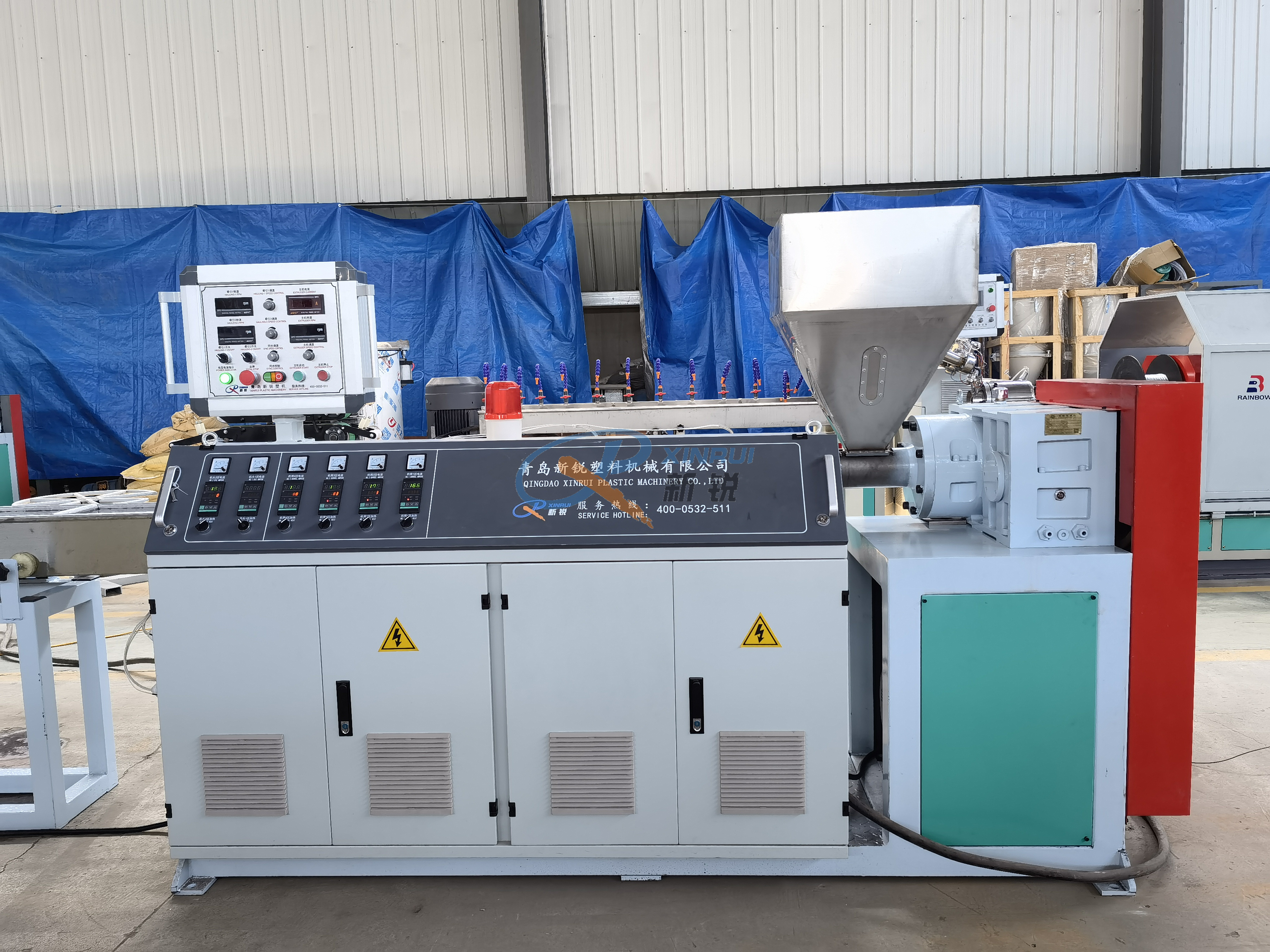
Views: 0 Author: Site Editor Publish Time: 2026-05-28 Origin: Site
Producing a structural consumable demands far more than basic extrusion. End-users rely on these materials to build critical, water-tight, and chemical-resistant joints. If you introduce defects during manufacturing, those joints will inevitably fail in the field. Polyvinyl chloride (PVC) remains notoriously heat-sensitive. You need specialized equipment capable of precise thermal and shear control to prevent catastrophic material degradation. Processing the resin correctly prevents it from burning within the barrel. This guide provides a bottom-of-funnel evaluation framework. We will help you select the right extrusion equipment by balancing material science, production efficiency, and capital expenditure realities. You will learn how to assess screw designs, cooling systems, and winding mechanisms. Read on to master the complexities of extruding high-quality rods and avoid common manufacturing pitfalls.
Equipment Specificity: A dedicated welding rod machine must feature tailored screw designs to manage PVC's narrow processing window (typically 160°C–200°C) without burning the resin.
Material Versatility: High-ROI machines can handle multiple formulations, transitioning between Rigid PVC (uPVC), Flexible PVC, and CPVC with minimal downtime.
Dimensional Accuracy: End-user welding tools require exact rod tolerances (standard 3mm–5mm diameters) and specific profiles (round, triangular, flat) to function.
Production Risks: The biggest threat to plastic rod production profitability is internal voiding and stress-cracking caused by improper cooling and winding tension.
Extruding a plastic welding rod seems simple at first glance. However, achieving consistent melt homogeneity and diameter accuracy at high speeds remains technically demanding. Manufacturers face strict tolerance limits. A minor deviation in temperature control leads to significant material degradation. You must balance raw output volume against structural integrity. Every millimeter of the extruded product must withstand rigorous field application without snapping or melting unevenly.
We must supply the exact profiles the market demands. Round rods serve general-purpose applications effectively. Triangular rods fit seamlessly into specific corner seams to provide structural reinforcement. Flat strips cover large surface areas and seal wide gaps perfectly. Standard end-user tools require these precise geometries to operate correctly.
Beyond shape, you must master the "like-to-like" welding principle. Your machine's output must precisely match the chemical composition of the base materials. For instance, Schedule 40 pipes handle low-pressure irrigation systems. Schedule 80 pipes manage high-pressure chemical flows. Producing an incompatible PVC welding rod for these systems guarantees failure. If degraded polymers enter the stream, they weaken the final weld. Consistency ensures the field technician achieves a permanent, molecular-level bond.
You must evaluate how your production line scales dynamically. Evaluate the equipment's ability to integrate with bulk resin feeding systems seamlessly. Manual feeding introduces inconsistencies in barrel pressure. Gravimetric dosing units eliminate this variable entirely. Automated packaging and spooling mechanisms minimize labor costs drastically. They also keep winding tension uniform. A well-integrated system elevates your overall plastic rod production efficiency. It removes manual bottlenecks from the factory floor.
Let us break down the hardware into critical zones. This structured approach helps buyers assess overall machine quality accurately. It prevents you from investing in under-specced equipment. High-quality zones work together to form a stable production environment.
Standard PE or PP extruders fail miserably with PVC. Polyvinyl chloride requires specific conical twin-screw or highly specialized single-screw extruders. These specialized designs minimize shear heat significantly. They prevent the resin from carbonizing inside the barrel. A poorly designed screw burns the material rapidly, ruining the entire batch.
Extruder Type | Material Suitability | Shear Heat Control | Burn Risk Level |
|---|---|---|---|
Standard Single-Screw (General) | PE, PP, ABS | Poor | High |
PVC-Optimized Single-Screw | Flexible PVC | Moderate | Medium |
Conical Twin-Screw | Rigid PVC (uPVC), CPVC | Excellent | Low |
Assess the precision of the extrusion die carefully. It must maintain consistent pressure to prevent surging. Smooth pressure ensures the PVC welding wire remains exactly within the 3mm to 5mm tolerance range. Fluctuations ruin the final diameter entirely. End-users cannot use rods that jam in their hot air tools. Invest in die heads featuring high-grade steel to resist abrasive resin compounds.
Multi-stage water cooling baths are absolutely mandatory. Rapid, uncontrolled cooling introduces massive internal stress. This sudden shock makes the rod brittle over time. It will snap during the end-user's welding process, halting their work. Gradual temperature reduction stabilizes the polymer chains properly. Use a variable-speed haul-off motor to synchronize pulling speed with the extruder output exactly.
Assess the equipment's ability to handle highly corrosive materials. Heat-sensitive resins require robust metallurgical defenses. Your machine must process varied formulations without requiring extensive downtime.
Formulations include complex UV stabilizers and plasticizers. Flexible rods demand significantly more plasticizers to maintain elasticity. Resin grades vary widely across different suppliers. The machine's barrel and screw must feature bimetallic anti-corrosive alloys. Prolonged production emits hydrochloric acid gas naturally. Standard steel degrades quickly under these harsh conditions. Bimetallic treatments extend the lifespan of your critical components drastically.
Chlorinated Polyvinyl Chloride (CPVC) requires even higher processing temperatures. It is significantly more viscous than standard formulations. Equipment must possess exceptionally high motor torque to push the melt forward. Localized temperature control prevents the material from stalling. You must manage this premium material delicately without degrading the batch. Precision heater bands ensure the barrel maintains the exact thermal profile required.
Practical operational advice maintains high Overall Equipment Effectiveness (OEE). It prevents costly material waste on the factory floor. Follow these advanced guidelines to optimize your output continuously.
PVC resin acts as a highly hygroscopic material. It absorbs ambient moisture rapidly. You must pre-dry the hoppers thoroughly before production begins. Moisture turns to steam inside the hot barrel. This trapped steam creates microscopic internal voids or porosity. End-users will experience severe "spitting" when applying a hot air gun to a porous rod. This ruins the joint completely. Establish strict pre-drying protocols.
Optimize your haul-off speed carefully to maintain consistency. Pulling the rod too fast reduces its diameter significantly. It alters the molecular alignment in undesirable ways. This excessive tension causes severe shrinkage later when the rod cools. Find the sweet spot between high output rates and structural stability.
Symptom | Probable Cause | Recommended Action |
|---|---|---|
Internal Voids / Porosity | Excessive resin moisture | Increase pre-drying time and hopper temperature. |
Inconsistent Diameter | Surging at die head / Haul-off speed mismatch | Synchronize extruder RPM with haul-off motor speed. |
Brittle Rod / Snapping | Cooling shock / Water bath too cold | Implement multi-stage gradual cooling. |
Surface Discoloration | Overheating / Shear degradation | Lower barrel temperatures; verify screw design compatibility. |
Maintain zero-tension winding consistently. Stretching the rod while it remains warm is a critical manufacturing error. The final spool will warp the product once it cools completely. Use automated torque-control winders. They adjust the pulling force dynamically as the spool diameter grows. This ensures every meter of product remains perfectly uniform.
Compare quotes carefully across different machinery manufacturers. Look beyond the initial sticker price to evaluate long-term viability. Make informed capital expenditure decisions based on engineering facts.
Focus on component origin and metallurgical data when evaluating a welding rod machine. Ask vendors for explicit details regarding their screw manufacturing processes. Verify the exact alloy combinations used in the barrel lining. A cheaper machine utilizing mild steel components will fail within months of continuous operation. Request documentation proving compliance with industrial safety and electrical standards.
Manufacturers often fall into predictable procurement traps. Avoid these pitfalls to protect your capital investment.
Ignoring Localized Automation: Never skip automated diameter laser-gauging systems. They pay for themselves quickly by rejecting out-of-spec segments automatically.
Underestimating Cooling Length: Short cooling baths force you to run at lower speeds. Ensure the footprint accommodates extended multi-stage water tanks.
Prioritizing Speed Over Torque: High RPM means nothing if the motor lacks the torque to push viscous materials like CPVC.
Using Generic Equipment: Re-purposing a standard pipe extruder for fine rod production rarely yields acceptable tolerances.
Investing heavily upfront in automation and material durability guarantees a stable production line.
Investing in a high-quality machine requires prioritizing precision thermal control. Focus on material handling capabilities over raw output speed. Consistent, defect-free production builds strong brand trust with end-users. Uncontrolled cooling and excessive shear heat destroy profitability quickly. Secure your workflow by demanding robust, bimetallic extrusion components.
Your next steps involve strict validation. Advise your engineering team to request sample runs using your specific resin formulations. Do this before finalizing any purchase order. Verify the metallurgical quality of the extruder components visually and through documentation. Implementing these strategies ensures your capital expenditure translates directly into reliable, high-margin product yields.
A: Technically possible with screw and die changes, but highly discouraged due to PVC's corrosive nature and differing melt behaviors; dedicated lines are safer and more efficient.
A: Varies by diameter and cooling bath length, typically ranging from 20 to 60 meters per minute for high-quality single strands.
A: Through a synchronized closed-loop system involving the extruder RPM, melt pressure at the die head, and variable-speed haul-off motors, often monitored by inline laser micrometers.