Views: 0 Author: Site Editor Publish Time: 2026-05-26 Origin: Site
Processing continuous synthetic fibers requires absolute precision and mechanical control. Applying uniform polymer layers to threads presents a major operational challenge for modern manufacturers. You must coat these materials flawlessly without compromising base tensile strength or causing uneven resin buildup. Precision inside the yarn coating machine directly determines raw material efficiency. It impacts overall line speed and final defect rates. In high-value applications like window blind fabric and architectural textiles, small errors cause costly structural flaws. These flaws often lead to entire batches failing quality inspections. This comprehensive guide provides a detailed technical framework for optimizing production lines. We will help you evaluate, operate, and upgrade your equipment. You will learn how to synchronize tension controls and regulate heating zones effectively. Mastering these specific operational variables ensures consistent output and helps you meet strict industrial tolerances reliably.
Uniformity demands precision: Consistent PVC yarn coating requires synchronized tension control and multi-zone temperature regulation to prevent resin starvation or excessive buildup.
Cooling dictates stability: Sufficient water bath length (typically 4+ meters) is critical for eliminating residual stress and maintaining dimensional stability in the coated yarn.
Formulation compatibility: Equipment must reliably process standard mixtures (e.g., 40% PVC resin, 35% calcium carbonate, plus plasticizers) without extruder blockages.
Quality correlates to operation: Proper machine calibration directly impacts end-product compliance, ensuring target peel strength (>4 N/cm) and minimal shrinkage (<2%).
Understanding the operational sequence is essential for assessing machine capability. It helps engineering teams plan facility integration effectively. A standard industrial line follows a strict processing order to ensure consistent polymer application. Skipping or rushing any phase compromises the final textile performance. You must control every mechanical step to achieve uniform coverage. Below is the primary operational sequence.
Yarn Unwinding and Tensioning: The process begins by feeding raw polyester yarn into the system. High-speed variable frequency drives (VFDs) and mechanical spring braking systems maintain constant tension. Proper tension prevents the raw fiber from twisting or bunching before it reaches the coating stage.
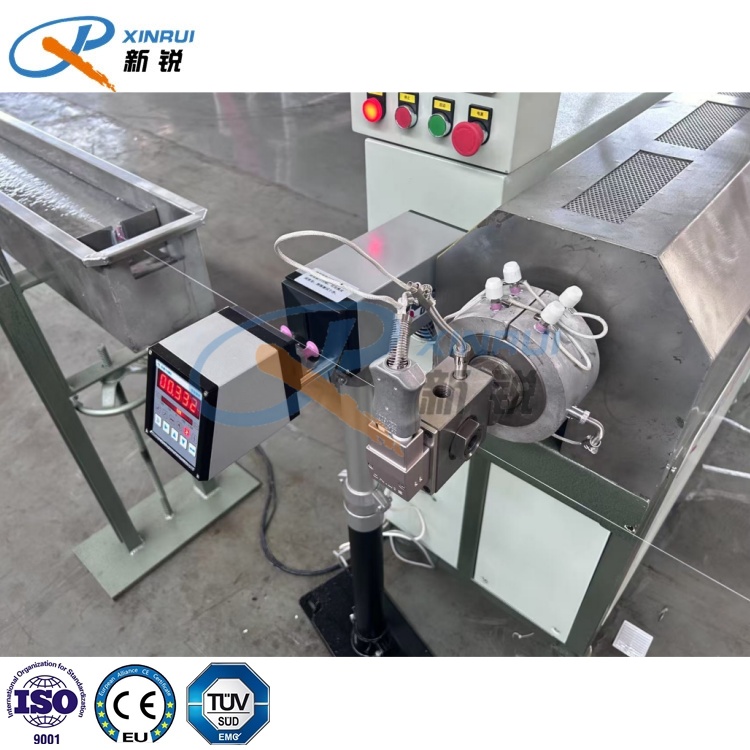
Extrusion and Coating Application: The equipment processes the formulation via specialized screw extrusion. The system melts the polymer precisely under high pressure. A custom die head or kiss-roller mechanism then bonds this melted polymer directly to the core fiber.
Cooling and Shaping Phase: The coated fiber immediately enters a relaxed water bath system. This critical step sets the hot polymer instantly. It locks in the desired cylindrical shape and removes accumulated residual thermal stress from the extrusion phase.
Automatic Winding: Precision spooling mechanisms collect the final cured product. They maintain exact final winding tension. Proper spooling tension prevents the equipment from crushing the newly cured outer layer.
Mastering this sequential framework guarantees smoother daily operations. It allows technicians to isolate problems quickly when defects appear on the production line.
Inconsistent polymer layers lead to dangerous weak spots. They cause aesthetic defects and erratic mechanical behavior under heavy physical loads. Operators must master tension and temperature variables to fix these common production issues. Reliable PVC coating consistency relies heavily on multi-zone temperature regulation inside the extruder.
Standardizing heat ensures the melt transitions smoothly across different processing zones. You need multi-zone heating to keep the flow obedient and prevent thermal degradation.
Feed Zone: Gradually warms the raw powder formulation to prevent clumping.
Compression Zone: Increases internal heat and mechanical pressure to melt the resin fully.
Metering Zone: Stabilizes the final melt temperature for smooth delivery into the die head.
Managing the core-to-coating ratio is equally vital. Dynamic tension control stops the core fiber from slipping during high-pressure phases. If the core breaks inside the die head, the entire line halts. Operators must constantly monitor VFD readouts to maintain ideal pulling resistance.
Manufacturers also face a strict penetration versus tear strength trade-off. Deep resin penetration locks individual filaments securely in place. This deep bonding increases the overall breaking strength of the material. However, it inherently reduces the specific tear strength of the final woven fabric. Locked fibers cannot shift or slide to distribute sudden puncturing loads. You must balance penetration depth based on specific end-user mechanical requirements.
Selecting the right equipment requires a strict technical evaluation framework. You must assess machines for continuous, high-volume production capabilities. Prioritize in-line processing features when reviewing machine specifications. Machines capable of single-pass operations significantly reduce manual material handling. They lower defect rates by eliminating intermediate storage steps and secondary processing passes.
You must match the application mechanism to your desired output volume and target thickness. An extrusion setup works best for thick, high-pressure industrial applications. A roller or kiss-roll mechanism suits lighter, high-speed production runs. The table below outlines the primary differences between these standard methods.
Coating Method | Ideal Application | Coating Thickness | Equipment Complexity |
|---|---|---|---|
Screw Extrusion | Heavy industrial textiles, architectural structures | High (thick coverage) | High (requires multi-zone heating) |
Kiss-Roller (Contact) | Lightweight shading, temporary covers | Low to Medium | Moderate (precision roller alignment needed) |
Dip Coating | Fully saturated technical fibers | Variable | Low (requires longer curing zones) |
Material agnosticism is another critical evaluation factor. Ensure your extruder and die heads handle varying chemical viscosities efficiently. Heavy-duty mixes containing 40% resin and 35% calcium carbonate demand robust screw designs. Specialty blends requiring UV inhibitors or flame-retardant additives need precise shear control. The PVC yarn coating equipment must adapt to different chemical behaviors without requiring complete mechanical overhauls. Flexible equipment allows you to bid on diverse manufacturing contracts.
Operating parameters must directly support downstream manufacturing compliance. Your daily success criteria should align with established ASTM standards for coated textiles. Adhesion and peel strength dictate the ultimate product lifespan. You must tune extruder pressure and heat carefully to maximize chemical bonding. Ensure layer adhesion meets strict bulk procurement minimums. These minimums typically exceed 4 N/cm for premium applications. Strong adhesion prevents disastrous delamination during later weaving or end-use handling.
Dimensional stability requires extended cooling infrastructure. Top manufacturers utilize 4.4-meter water baths and multi-roller relaxation zones. Your primary objective is keeping continuous fiber shrinkage below 2%. Low shrinkage ensures long-term reliability in taut applications like tensile membrane structures. Unrelieved thermal stress causes the final product to warp when exposed to ambient sunlight.
Surface finish also matters greatly for easy cleaning and maintenance. You should adjust die parameters to achieve a smooth, completely non-porous finish. A tight outer layer resists water wicking, dirt accumulation, and fungal mildew. Exposed filaments act like microscopic straws, pulling moisture deep into the core. Proper calibration yields a visually appealing, highly functional textile thread. This attention to detail protects the inner core from severe environmental degradation.
Running a high-speed line involves hidden maintenance hurdles and technical risks. Implementation realities demand proactive management from your engineering team. Improper machine alignment causes immediate material waste. Die head calibration failures lead directly to eccentric coating. The protective layer becomes thicker on one side of the fiber. This unbalances the thread and causes severe weaving defects down the line.
Thermal degradation presents severe operational risks. You must manage machine downtime properly to protect your equipment. Leaving polymer stationary in a heated extruder burns the material quickly. Burned resin breaks down into corrosive byproducts and causes stubborn blockages. This leads to costly localized equipment damage. Purging the system immediately during sudden stops prevents this dangerous degradation.
Establish strict routine maintenance protocols to ensure consistent production yields.
Screw Cleaning: Schedule regular teardowns to remove carbonized polymer buildup from the extrusion screw.
Water Filtration: Perform daily water bath filtration to eliminate debris and maintain optimal cooling temperatures.
VFD Calibration: Conduct monthly drive calibration to maintain precise tension accuracy across all zones.
Die Inspection: Check alignment weekly to prevent eccentric layers and uneven material distribution.
Following these specific steps prevents unplanned downtime. It keeps your yarn coating machine running at peak mechanical efficiency year-round.
Achieving uniform coverage is a direct function of precise tension, multi-zone heating, and controlled cooling. Consistent processes eliminate aesthetic defects and improve raw material efficiency significantly. We strongly recommend procurement and engineering teams request verifiable testing data during machine pilot runs. Always verify shrinkage rates and peel strength before signing off on new equipment integrations. As a clear next step, audit your current product failure rates thoroughly. Track specific manufacturing issues like delamination, eccentric layers, or uneven weaving. Use this concrete data to specify the exact tension and extrusion upgrades required for your facility. Taking these proactive measures ensures your production line meets the highest industrial standards.
A: Production speeds vary based on extruder capacity and the required curing time. Most industrial machines operate between 150 to 350 meters per minute. Heavier coverage requires slower speeds to ensure complete melting and sufficient cooling in the water bath.
A: Equipment handles different thicknesses using interchangeable die heads and adjustable VFD tension settings. Operators simply swap the die nozzle to match the new core diameter. They then adjust the pulling tension to prevent the thinner or thicker fibers from breaking.
A: Yes, many screw extruders can handle compatible thermoplastics like polyurethane or TPE. However, you must reconfigure the temperature zones and die components. The machine is optimized for standard PVC formulations, so switching materials requires careful recalibration.
A: Unrelieved thermal stress trapped in the yarn causes the final woven blind to warp. It will curl or shrink significantly when exposed to ambient sunlight and heat. Removing this stress in the cooling bath ensures the blind hangs perfectly flat.