

Views: 0 Author: Site Editor Publish Time: 2026-05-23 Origin: Site


The global construction sector is undergoing a massive transformation. Companies are rapidly moving away from traditional timber and metal shuttering. Strict deforestation bans drive this structural shift toward sustainable materials. Environmental bidding requirements also mandate eco-friendly practices across major infrastructure projects. Contractors currently face shrinking profit margins because wood templates survive only five to eight uses. High disposal costs further squeeze site profitability at the end of every project. This creates a high-demand market for reusable plastic alternatives. We provide prospective manufacturers, investors, and building material suppliers a comprehensive evaluation framework. You will learn critical technical criteria for assessing a hollow board machine. This equipment produces high-yield, construction-grade plastic formworks safely and efficiently. The following guide details machinery configurations, structural design evolutions, and on-site implementation guidelines. This comprehensive analysis helps you avoid common procurement mistakes while highlighting essential technical specifications and real-world deployment strategies.
Market Viability: The shift toward plastic templates enables a highly profitable "leasing model" for suppliers, driven by a product lifespan exceeding 50+ uses.
Structural Innovation: The evolution from standard O-type to V, N, and square-grid structural designs has maximized load-bearing capacity while maintaining a lightweight profile (e.g., ~20kg for a 15mm board).
Evaluation Criteria: Selecting the right construction plastic board machinery requires scrutinizing screw L/D ratios, PLC automation reliability, and calibration cooling stability for continuous 24/7 operation.
Producing a PP formwork board represents a highly lucrative supply-and-lease business model. It is not merely a standard manufacturing operation. The financial return heavily outweighs traditional plywood operations. Plywood absorbs water, warps, and ends up in landfills. This linear consumption model hurts the environment and drains capital. A plastic panel breaks this cycle. It transforms a consumable expense into a durable capital asset. A standard plastic panel easily offers more than 50 pouring cycles under normal conditions. This exceptional durability enables a highly profitable leasing model. Suppliers rent panels to multiple sites, generating recurring revenue month after month. Leasing companies recover their initial investment rapidly. They then enjoy pure profit for dozens of subsequent pours. Government restrictions on natural forest logging accelerate this transition heavily across international markets. Green-building mandates now frequently appear in strict tender documents. Project owners demand 100% recyclable materials on site to meet carbon reduction goals. Investing in modern construction formwork fulfills these bidding criteria perfectly. You gain an immediate competitive edge during project compliance reviews. Advanced machinery provides excellent raw material flexibility for the factory owner. Extruders can process varied inputs efficiently without jamming. You can feed recycled PP flakes directly into the hopper alongside virgin pellets. This lowers raw material overhead significantly. It maintains structural integrity while maximizing profit margins per finished board.
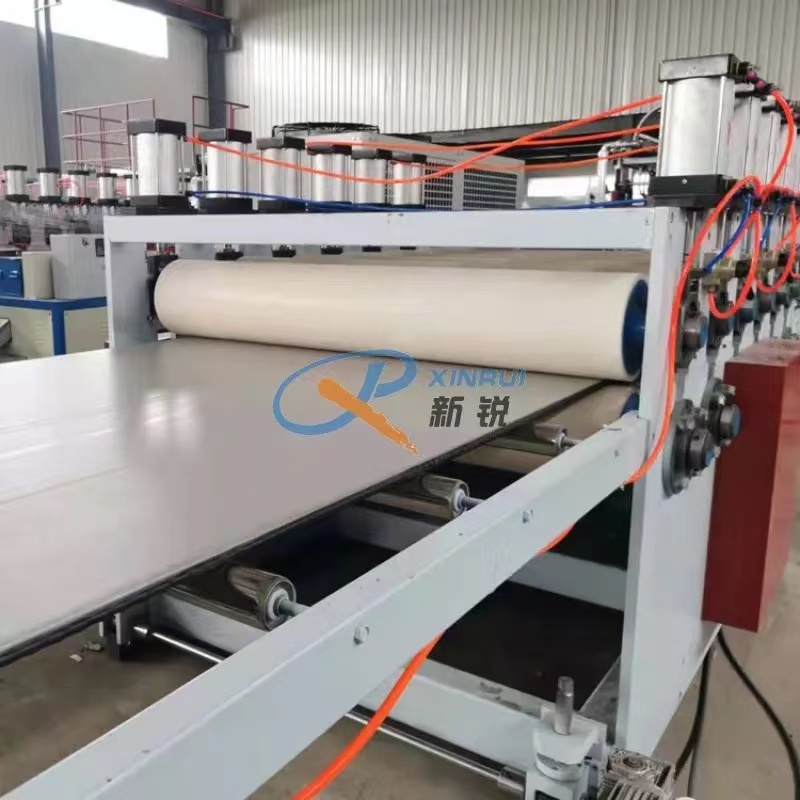
Extrusion lines require precise architecture for continuous, uninterrupted production. A standard setup includes over 14 essential hardware components engineered for heavy-duty output. The line starts at a powerful single-screw extruder. Manufacturers commonly deploy robust SJ-120 models for this initial melting stage. The molten plastic then passes through high-pressure hydraulic screen changers. Melt pumps ensure uniform flow pressure into the shaping die. Automated stackers handle the final cooled product seamlessly at the end of the line. Screw design directly influences material plasticization quality and energy consumption. Buyers must evaluate L/D (length-to-diameter) ratios closely before purchasing. Ratios like 33:1 or 36:1 ensure optimal output stability during high-speed runs. High L/D ratios handle blended recycled granules effectively. They prevent material degradation inside the barrel while ensuring a homogenous melt. Modern machines feature precision temperature control algorithms. They prevent the plastic melt from overheating. The hydraulic screen changer filters out impurities from recycled flakes without stopping the line. This guarantees continuous production. Calibration accuracy dictates the final surface smoothness of the panel. Vacuum calibration tables and precise cooling brackets shape the extruded profile instantly. This system cools the hot plastic uniformly across the entire width. It creates a surface smooth enough for a pristine "fair-faced concrete" finish. Workers never need messy chemical release agents on site. Throughput defines your daily operational profit ceiling. High-productivity lines achieve exceptional output yields consistently. Operators expect daily productions ranging from 550 to 800 pieces per shift. This translates to over 10,000 kg of finished material daily. Consistent yield guarantees rapid order fulfillment for large contractor clients.
Early hollow designs relied on basic O-type circular profiles. The industry quickly transitioned to optimized internal grid structures to handle heavier loads. Modern internal ribs use square, cross, V-shaped, and N-shaped patterns. These intricate geometries prevent thermal expansion during hot summer pours. They also stop structural deformation under heavy wet concrete pressure. Square and cross grids dominate the premium market today due to their balanced load distribution. We provide a benchmark weight-to-thickness reference chart below. Industry buyers rely on these standard 1220mm x 2440mm panel dimensions for site calculations.
Board Dimensions (mm) | Thickness (mm) | Internal Grid Structure | Average Weight (kg) |
|---|---|---|---|
1220 x 2440 | 12mm | Square / V-shape | 16 - 18 kg |
1220 x 2440 | 15mm | Square / Cross | 19 - 21 kg |
1220 x 2440 | 18mm | Square / Cross | 24 - 26 kg |
Innovation continues to push structural performance further every year. Continuous Fiber Reinforced Thermoplastic (CFRT) surface lamination is a recent major breakthrough. Manufacturers add a sub-1mm CFRT layer to the panel faces during extrusion. This incredibly tough layer mitigates heavy concrete abrasion and scratch damage. It pushes the PP hollow formwork board lifespan beyond 100 pouring uses. This positions your product perfectly for premium leasing markets and high-end infrastructure projects.
Builders demand absolute reliability across varied global climates. A high-quality plastic template easily handles extreme operational tolerances. These rigid boards remain completely stable from -10°C up to 90°C. They do not shatter in freezing winter conditions. They also boast inherent flame-retardant properties. This crucial compliance ensures strict safety on modern urban job sites. Moisture presents absolutely zero threat to the extruded material. The panels offer a massive zero-delamination advantage over traditional bonded plywood. You can submerge them in standing water indefinitely without swelling. High-salt and highly alkaline environments never degrade the plastic matrix. This chemical resistance makes them ideal for marine sea walls. They also excel in damp mining operations and heavy bridge construction projects. On-site processability remains identical to traditional plywood handling. Construction teams face exactly zero learning curves when switching materials. They can saw, drill, and nail the boards effortlessly. Workers simply use their existing standard carpentry tools. This seamless integration guarantees swift adoption by veteran scaffolding teams who resist workflow changes.
Proper installation guarantees maximum product reuse cycles for the leasing company. Standardized keel spacing maintains structural integrity against extreme wet concrete pressure. We recommend specific implementation guidelines for all site scaffolding teams. Following these rules prevents unnecessary panel stress and localized fractures.
Standardized Spacing: Keep keel spacing strictly between 20-25cm for horizontal cast-in-place slabs.
Vertical Support: Tighten structural spacing to 15-20cm for vertical wall panels to combat hydraulic pressure.
Stress Prevention: Always cross vertical internal ribs using sturdy wooden battens to distribute loads.
Hardware selection matters significantly during temporary site assembly. Use optimal nail lengths between 30mm and 35mm. This exact length secures the panel tightly to the wooden supports. It prevents unnecessary internal puncture damage to the hollow structural grid. Safe dismantling protocols maximize the panel lifespan exponentially. Workers should never drop large connected sections from high elevations after the concrete cures. Always start removing panels from small individual sections at one end. Applying excessive force during dismantling often ruins reusable materials. Teach your site supervisors to enforce gentle removal techniques. Using a simple crowbar correctly at the reinforced edges saves thousands of dollars in replacement costs. This careful practice protects your leased inventory for future profitable project deployments.
Machinery purchases require strict technical evaluation and due diligence. Start by checking automation logic and electronic component reliability. Look closely for internationally recognized electrical components in the control cabinet. Top-tier PLCs from brands like Siemens or Schneider minimize costly operational downtime. They also simplify localized troubleshooting and minor repairs significantly. Zero-waste integration is an absolute necessity for modern manufacturers today. Select a machinery manufacturer offering heavy-duty inline crushing capabilities. Ensure they include reliable recycling machinery directly beside the extrusion line. This allows you to re-extrude edge-trim offcuts immediately. Damaged boards also go straight back into the grinder hopper without leaving the factory floor. Do not skip mandatory pre-shipment factory testing before making final payments. Require rigorous operational testing before the machine leaves the assembly plant. Review the manufacturer's official warranty terms thoroughly. A standard 12-month minimum warranty is essential for a secure investment. Confirm they provide comprehensive global installation support and operator training. Use these specific criteria when sourcing a reliable construction plastic board line.
Investing in modern panel machinery perfectly aligns with macroeconomic green-building trends. The entire construction industry currently faces intense localized cost-reduction pressures. Durable plastic panels solve both of these massive issues seamlessly. They eliminate timber waste while significantly boosting profit margins per pour. Take these action-oriented next steps immediately to begin your transition:
Calculate your localized return on investment using regional recycled material availability.
Request specific L/D technical datasheets from shortlisted machinery manufacturers.
Compare daily output capacities to match your target leasing volume accurately.
Verify closed-loop zero-waste recycling capabilities before finalizing any hardware contracts.
Evaluate your local market demand carefully. You will find that transitioning to plastic templates offers an undeniable competitive advantage for your entire supply chain.
A: Yes, advanced extrusion lines easily handle up to 100% recycled PP or PE flakes. However, manufacturers often blend virgin materials with recycled granules to maintain optimal structural strength. Proper screw L/D ratios (like 36:1) ensure stable plasticization regardless of your specific input mix.
A: A standard hollow plastic template typically endures 50 to 60 uses under normal on-site handling. Adding a Continuous Fiber Reinforced Thermoplastic (CFRT) lamination layer drastically reduces concrete abrasion. This technical innovation reliably pushes the lifespan past 100 uses.
A: No, it does not require any chemical release agents. The inherently smooth plastic surface prevents concrete from sticking. This characteristic effortlessly creates a "fair-faced concrete" finish while saving contractors substantial money on chemical agents.
A: Modern extrusion lines feature a closed-loop zero-waste system. They include inline crushing machinery. Edge trims and rejected boards are automatically pulverized and fed directly back into the hopper for immediate re-extrusion.


